Editor’s Note
**Editor’s Note:** This article explores the intricate protocol behind royal tiaras, featuring insights from experts on their symbolism, proper wearing, and historical evolution.
The Protocol of Royal Tiaras Revealed: The Secret of How They Are Worn, What They Mean, and Their Evolution
Three experts in etiquette, jewelry, and styling explain in detail everything behind this key symbol of the monarchy.
More information:
The ties that unite Letizia with Queen Victoria Eugenia: fashion, heirloom jewelry, and a new vision of the Crown
Maite Torrente
Published
27 November 2025
02:49h
If there is one thing that defines the pomp and splendor of the monarchy, it is its grand jewelry—those pieces that in Spain are reserved for very rare and special occasions such as gala dinners or official portraits. And among them, tiaras are always the main protagonists.
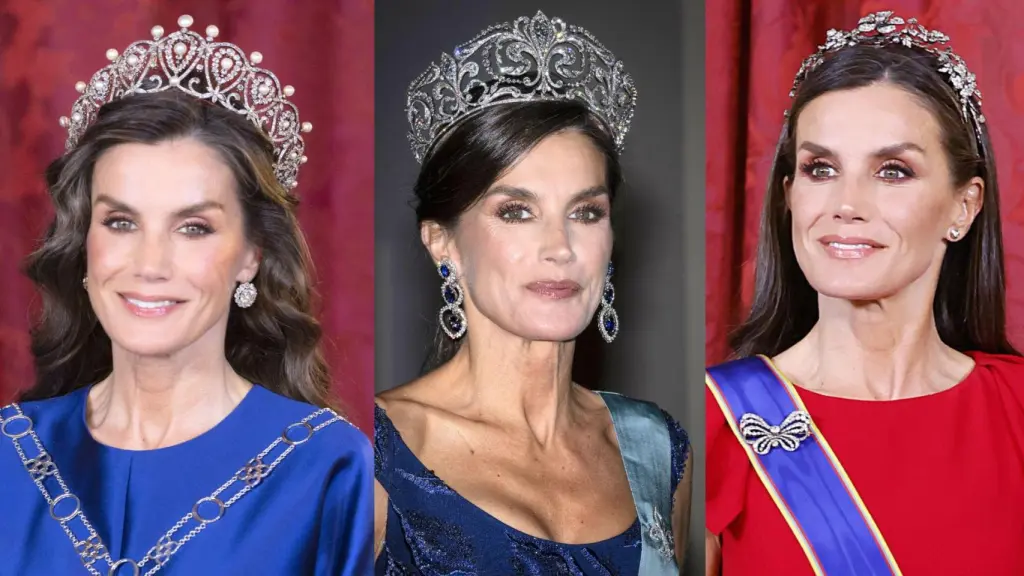
In this final stretch of 2025, they gain relevance; the visit to Spain of the President of Germany and his wife allowed us to see again a piece from the royal jewelry collection at the banquet in honor of the couple: the Cartier tiara, which was debuted in 2018 and brought back seven years later.
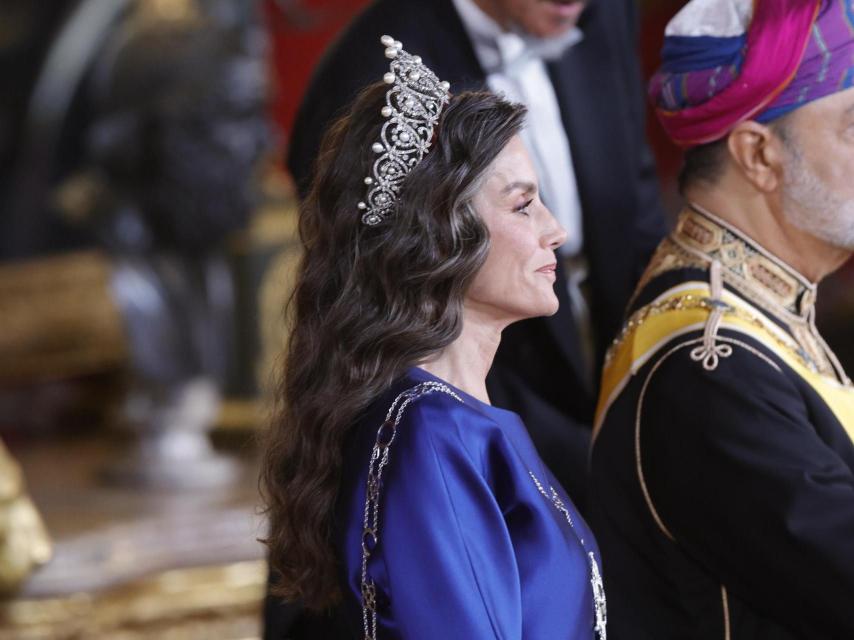
Earlier this month, another official visit, that of the Sultan of Oman, caused Queen Letizia’s look, wearing the Russian diadem on her head, to change the rules in a certain way. And behind these historic pieces lie protocol rules and secrets that escape the eye. Uses have changed over time, but the basics remain.
Letizia and the mystery of the only tiara she never wore: will she debut it with the Sultan after more than 20 years ‘hidden’?
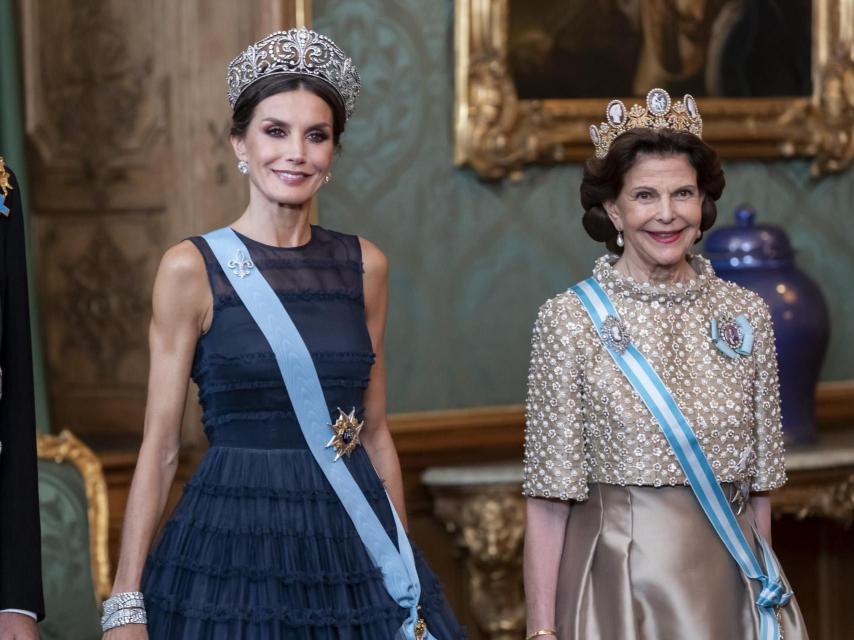
Queen Letizia, with the Fleur-de-Lis tiara, and Queen Silvia of Sweden, with the Cameo diadem.
Gtres
María José Gómez Verdú, expert in protocol and etiquette, explains that this jewel is a sign of rank and institutional representation, and its use is reserved for acts of maximum solemnity: state banquets, coronations, diplomatic receptions, or gala dinners.
Therefore, nothing is casual and the message always underlies.
In protocol, this type of gesture is considered acts of “symbolic courtesy, with a communicative power as effective as a speech.”
Tiaras are witnesses to the transformation of the Crown and, despite maintaining their regal meaning, they also adapt to changes subtly. As Jesús Reyes explains:
A clear example of this is seen in Queen Letizia, who has worn the floral and Russian as a diadem with loose hair.
María José Verdú analyzes it from her field:
They should be placed slightly tilted backward, on the upper part of the skull, so that they seem to crown the head without being ostentatious. However, nowadays, the use of tiaras over half-up hairstyles and even loose hair has become widespread.
The 19 people who hold the Golden Fleece and why Queen Sofía is an exception: from King Juan Carlos to Nicolas Sarkozy
And at this point, it is especially interesting to know the way they are secured. As the protocol specialist points out, this involves great technical knowledge.
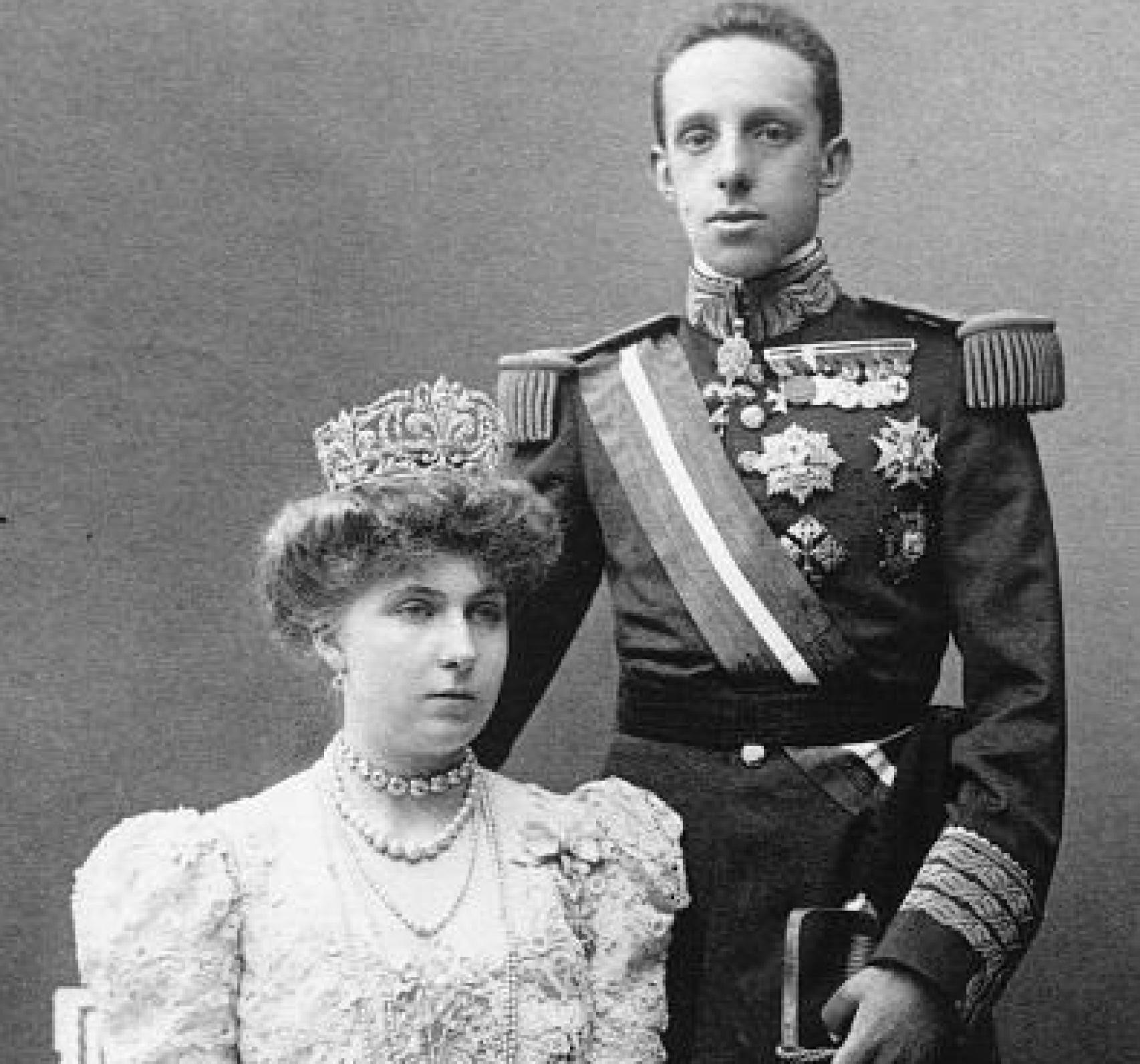
Modern ones, on the other hand, often incorporate more comfortable and lighter systems, “adapted to less structured hairstyles. However, the goal remains the same: that the tiara seems to float naturally on the head, without revealing its complex fastening.”
Undoubtedly, they require the expertise of hairdressing professionals. Gema Casas, director of Gema Casas Organic Hairdressing, offers some tips.