
Editor’s Note
**Editor’s Note:** This report examines the booming gold-buying sector in Ticino, where shops are ubiquitous amid record-high prices. Since stricter regulations took effect in 2023, RSI investigates whether the new rules are being properly enforced.
Ticino: The Canton of Gold Buying
Shops where you can sell necklaces or jewelry are everywhere. The sector has been better regulated since 2023. RSI went to verify if and how the new rules are being followed.
22.11.2025, 15:54
22.11.2025, 17:52
04:23
The Gold Trade
Telegiornale 22.11.2025, 12:30
By: Mattia Pacella
In these times when the price of gold is sky-high, many people may have considered selling a used chain or an old ring. Selling the precious metal is truly simple. Just go to one of the many gold-buying shops scattered throughout the canton: the attendant weighs the goods, evaluates them, if you accept the price you are paid in cash, and that’s it. All in a few minutes.
However, this very simplicity can hide pitfalls. Beyond the risk of incurring unfavorable valuations, the sector has been prone to money laundering risks. For this reason, since the end of 2023, a stricter new federal regulation has been in effect, designed to prevent the introduction of precious metals of dubious origin onto the market and to ensure the traceability of the precious metal and transactions.
According to information on the website of the Federal Customs Administration, the law stipulates that anyone who professionally purchases used gold (with an annual turnover of at least 50,000 francs) must register with the Precious Metals Control Office (UCMP) and obtain a specific license. These operators are required to identify their customers and document each individual purchase. Failure to comply with these obligations can lead to reports and sanctions.
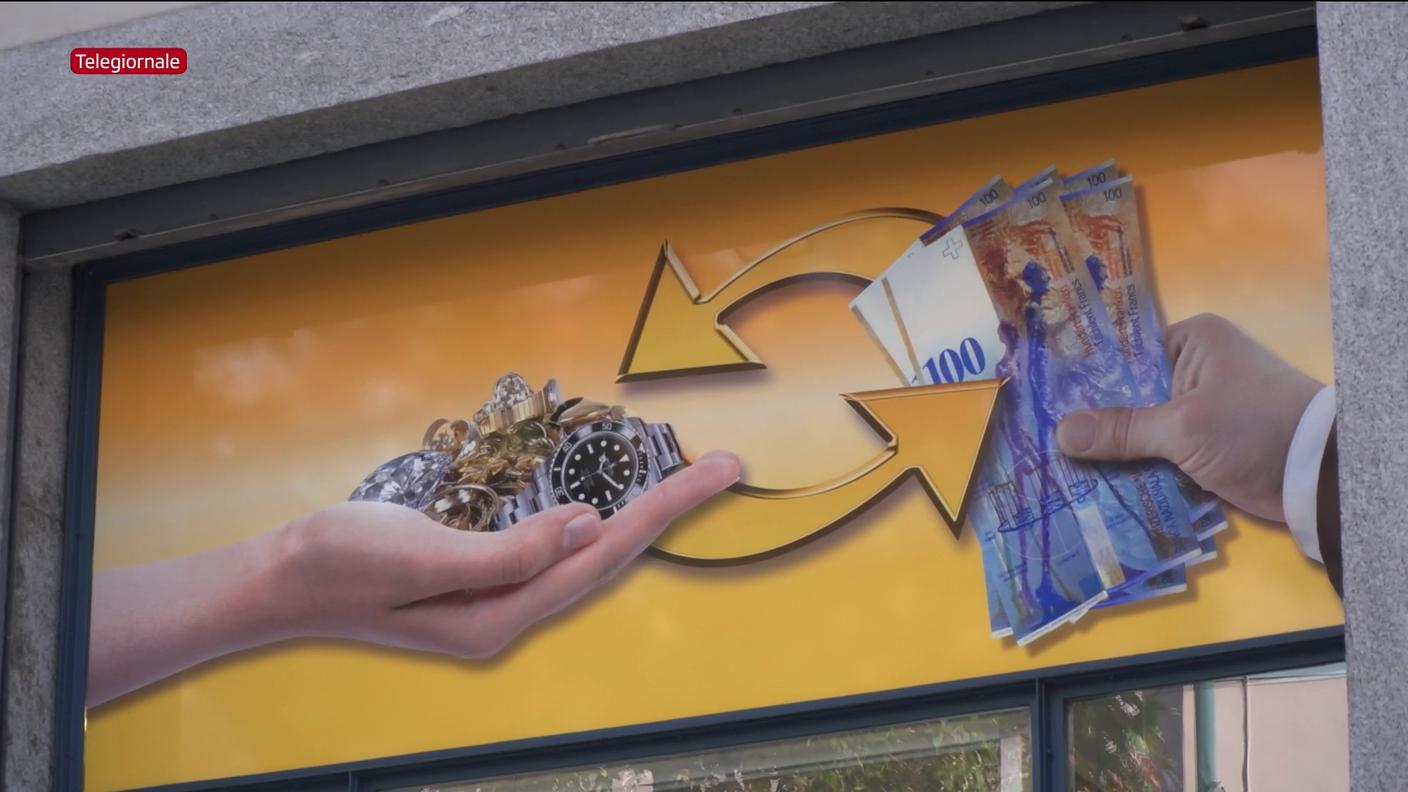
We went into the field to verify if these rules are being followed. The investigation conducted by RSI revealed a mixed situation. In all the gold-buying shops visited anonymously, we were asked to present an identification document. However, in some establishments, the sales process was cursory: sometimes payments were made with few questions and little checks on the origin of the goods. There was no shortage of operators who reassured us by stating they had never undergone inspections, while others openly claimed that transactions would not be reported to the tax authorities.
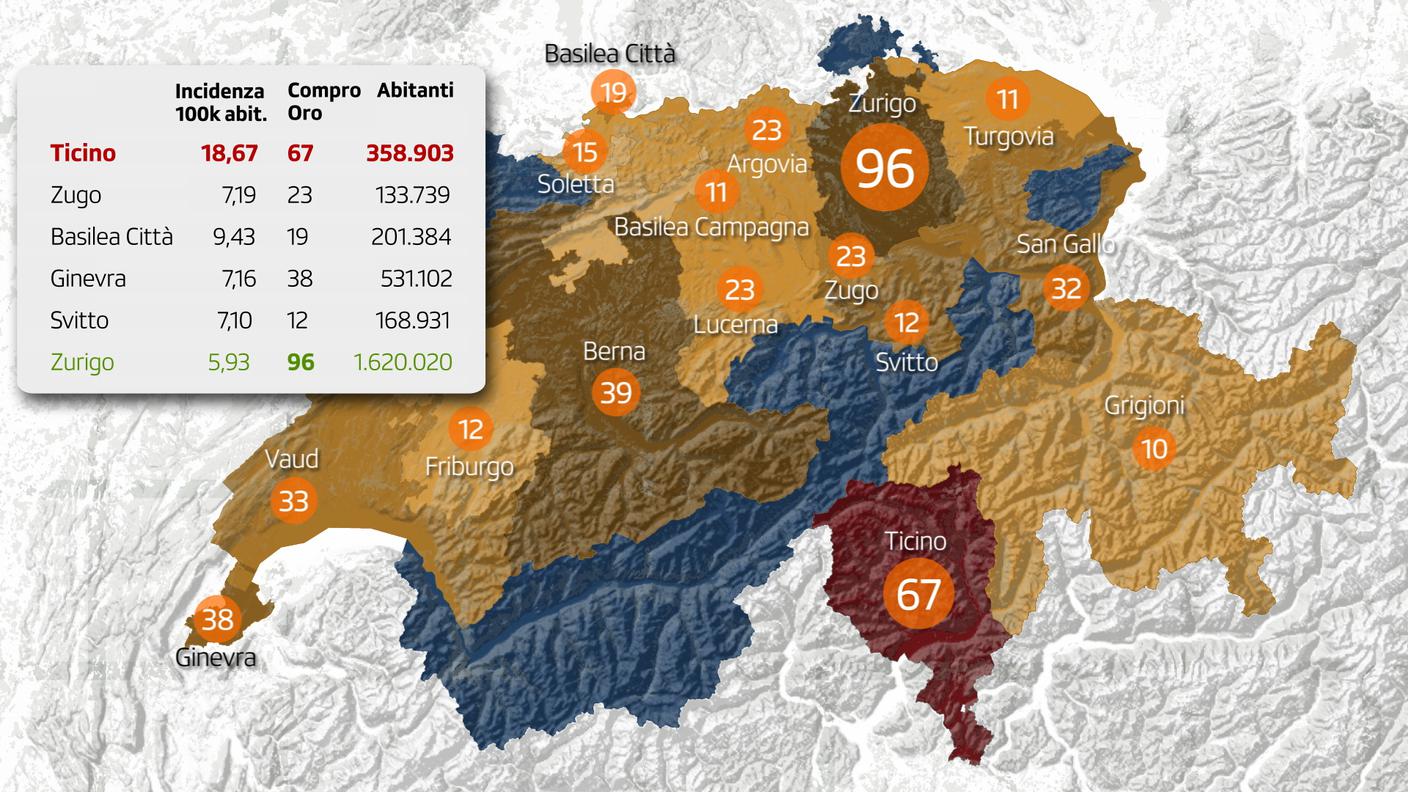
With 67 registered gold-buying shops, Ticino is the second Swiss canton in absolute number of establishments, after Zurich which has 96 out of a national total of over 450. However, considering the data relative to the population, Ticino ranks first in Switzerland for the density of gold buyers per hundred thousand inhabitants.
According to some experts, this concentration is partly attributable to the proximity to Italy, where regulations on used gold are even stricter. In Italy, in fact, operators must not only identify the seller but also keep detailed records in a mandatory anti-money laundering register and report suspicious transactions to the Financial Intelligence Unit. Furthermore, cash payments are only allowed up to 499.99 euros: above this threshold, traceable means such as bank transfers or checks must be used.
In Switzerland, on the contrary, there are no limits on cash payments. Only for transactions exceeding 100,000 francs do additional obligations and communications to the competent anti-money laundering authorities come into effect.
In Stabio, we meet Francesco Ardemagni from ArdeLive. The industry operator explains the practical application of the regulations: each purchase is recorded with the seller’s full details, a detailed description of the item, and a copy of the identification document.
Despite the new rules and increased bureaucracy, however, the business remains interesting. “We are trying to regulate an area that can create problems at the national level,” Sabino explains in conclusion, “and the activity of these shops can still be commercially profitable.” Furthermore, to guarantee legality, the Customs Fraud Office can intervene in case of irregularities or suspicions, confirming the growing attention towards this sector.
Enter the RSI Info WhatsApp channel
https://whatsapp.com/channel/0029Vat6p4zL2ATyO8IRFJ2C
INFO
#Ticino
#Switzerland
#Zurich
#Precious Metals Control Office
#UCMP