Editor’s Note
**Editor’s Note:** A routine donation to a Canadian thrift store has sparked an archaeological mystery. Researchers at Simon Fraser University are now working to determine the age and origin of an anonymously donated jewelry set that may be ancient.
A jewelry donation to a thrift store in Canada has turned out to potentially be a lot older than meets the eye. Now, a group of researchers at Simon Fraser University is trying to decipher when and where the set originated.
There are many good reasons to wander into a thrift store, including finding good deals and vintage items that nobody else has. But one thrift store in Canada got a donation that’s so old — it may be ancient. It was a set of jewelry that came from an anonymous donor, which was made up of two medallions and 11 rings.
The items looked so old that an employee did some research to see if they had any kind of historical significance.
A few months of digging resulted in no real clues, so the store put the set up for sale for $30. Shortly thereafter, a customer noticed the jewelry set and echoed the staff’s initial thinking. So, the thrift store employees sent an email to the archaeology department at nearby Simon Fraser University (SFU).
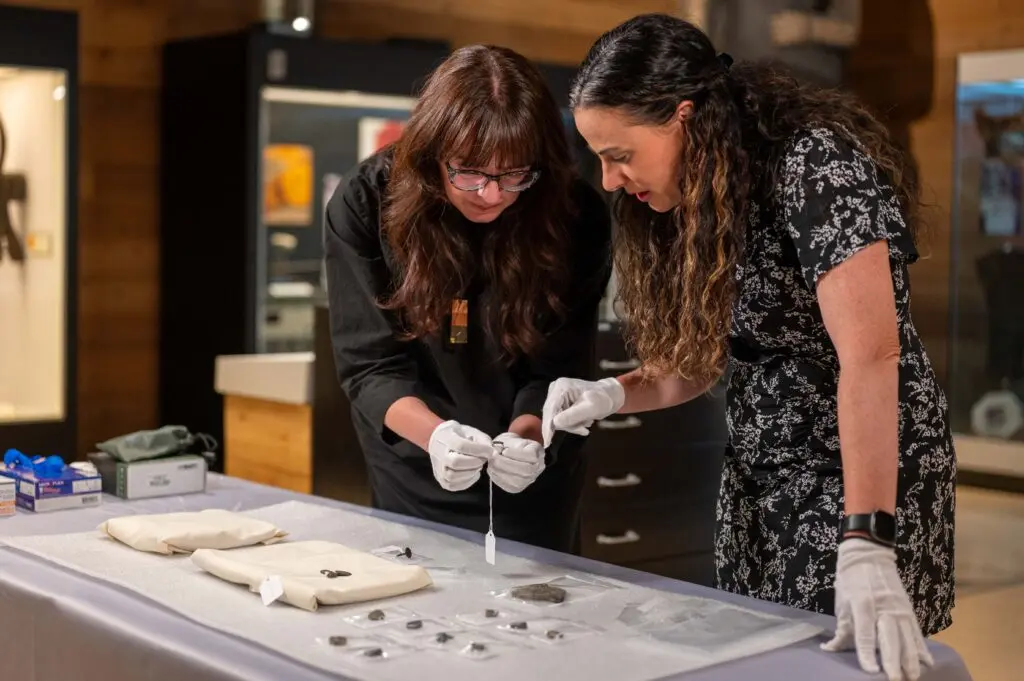
After conducting some initial, visual analyses, Higgins and her colleagues believed the items may very well be ancient. The thrift store then donated them to the university for further research.
Despite being donated together, Higgins thinks some of the items actually came from different time periods.
The team is also trying to figure out where the items came from.
To nail down those details, Higgins said they need to do more research and testing. They’re even recruiting students to help with that by designing a new course around the items at SFU. Tremain is also leading the course and said students will learn how to tackle the ethical questions surrounding this work, too.
In fact, Higgins said, as archeologists and museum professionals, her team has a duty to make sure that artifacts like these are returned to their country of origins.
The new course is set to start in September of 2026.
