Editor’s Note
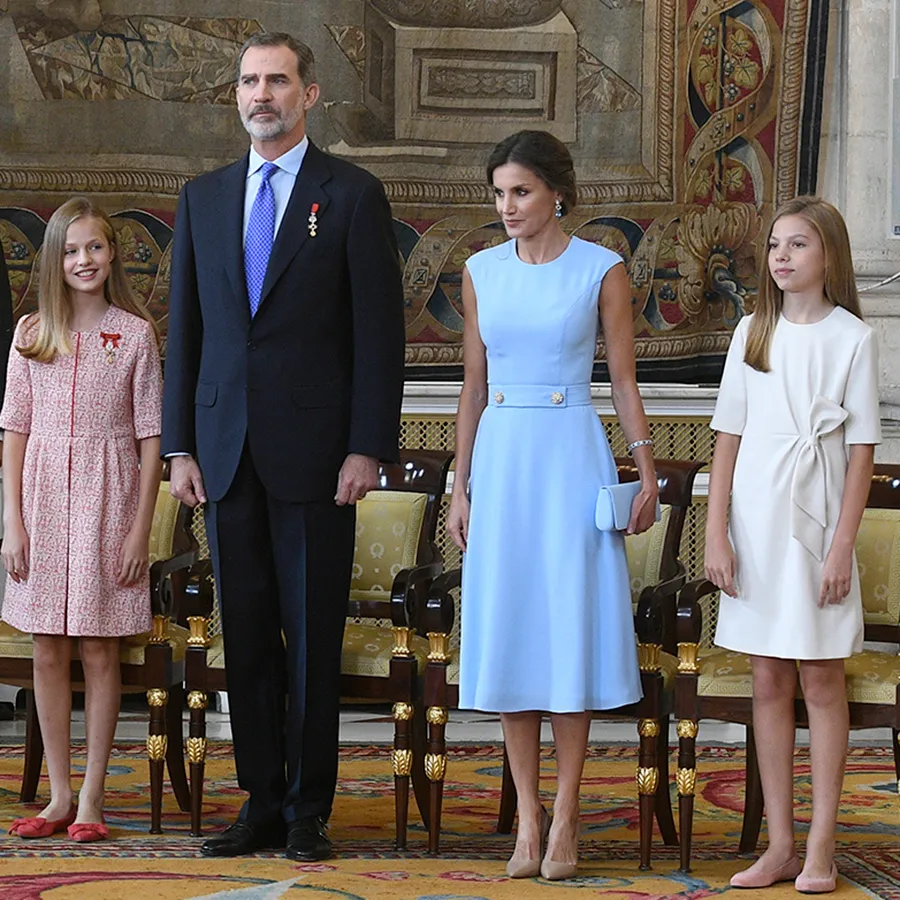
Queen Letizia of Spain is redefining royal jewelry style with intention and restraint, drawing on her pre-royal career as a journalist to craft a modern, deliberate approach to adornment.
“Respect begins with how a woman treats herself.” The quote, often attributed to Queen Letizia of Spain, feels especially apt when considering her relationship with royal jewelry. Letizia has earned a reputation as one of the most deliberate jewelry wearers of her generation. Perhaps it stems from the fact that she was not born into royalty and spent years as an acclaimed journalist before entering the monarchy. Rather than leaning into spectacle or excess, she gravitates toward tradition and intention. That sensibility mirrors the view of Zuleika Gerrish, jewelry historian and co-founder of Parkin & Gerrish.
Zuleika Gerrish is an antique, vintage, and fine jewelry expert as well as a gemmologist and co-founder of Parkin & Gerrish with her husband Oliver. Alongside running Parkin & Gerrish, she lectures on historic jewelry, sharing her expertise with new audiences.
Ahead is a look at Queen Letizia’s deliberate, minimalist approach to royal jewelry and how it has reshaped what power and elegance look like in the 21st century.
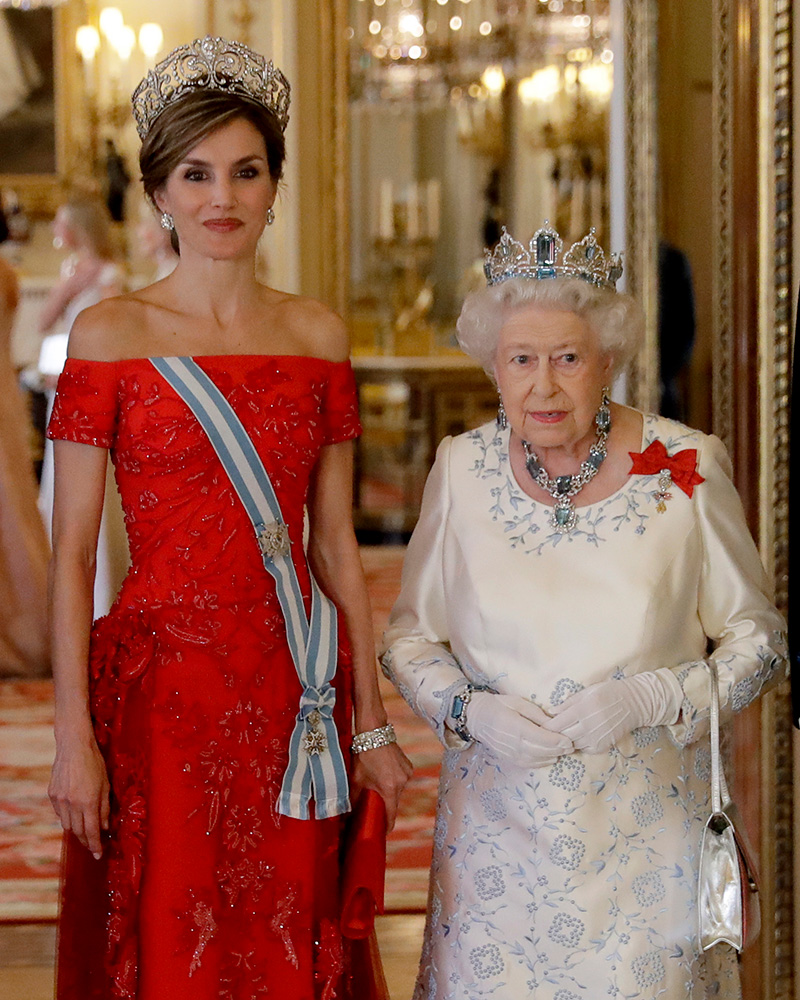
Her jewelry choices form a central part of this evolution. As queen consort, every selection carries symbolic weight.
Researcher and royal jewelry historian David Rato notes that what distinguishes her approach from many contemporary queens and consorts is discipline and intention. Unlike several of her peers, she is not a habitual wearer of jewelry, particularly large-scale pieces or historic heirlooms, and typically a single gold ring. Jewelry is never decorative filler.
He contrasts this with queens such as Queen Máxima of the Netherlands, Queen Mary of Denmark, and Queen Mathilde of Belgium, for whom jewelry plays a visible role in daily royal presentation.
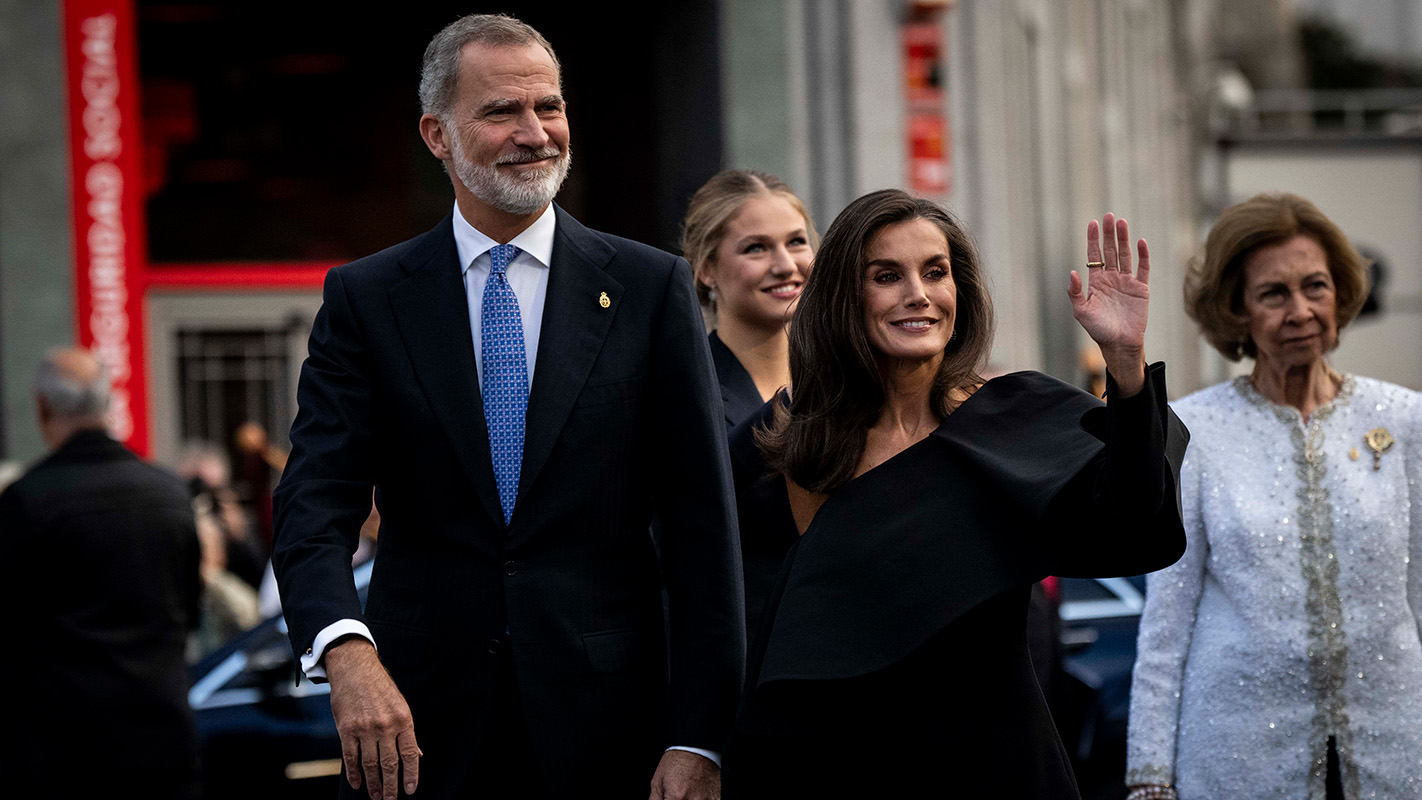
That restraint does not mean she avoids tiaras altogether. On the contrary, when she wears one, the choice becomes an event in itself. Ahead, we take a closer look at some of Queen Letizia’s most pivotal jewelry moments.
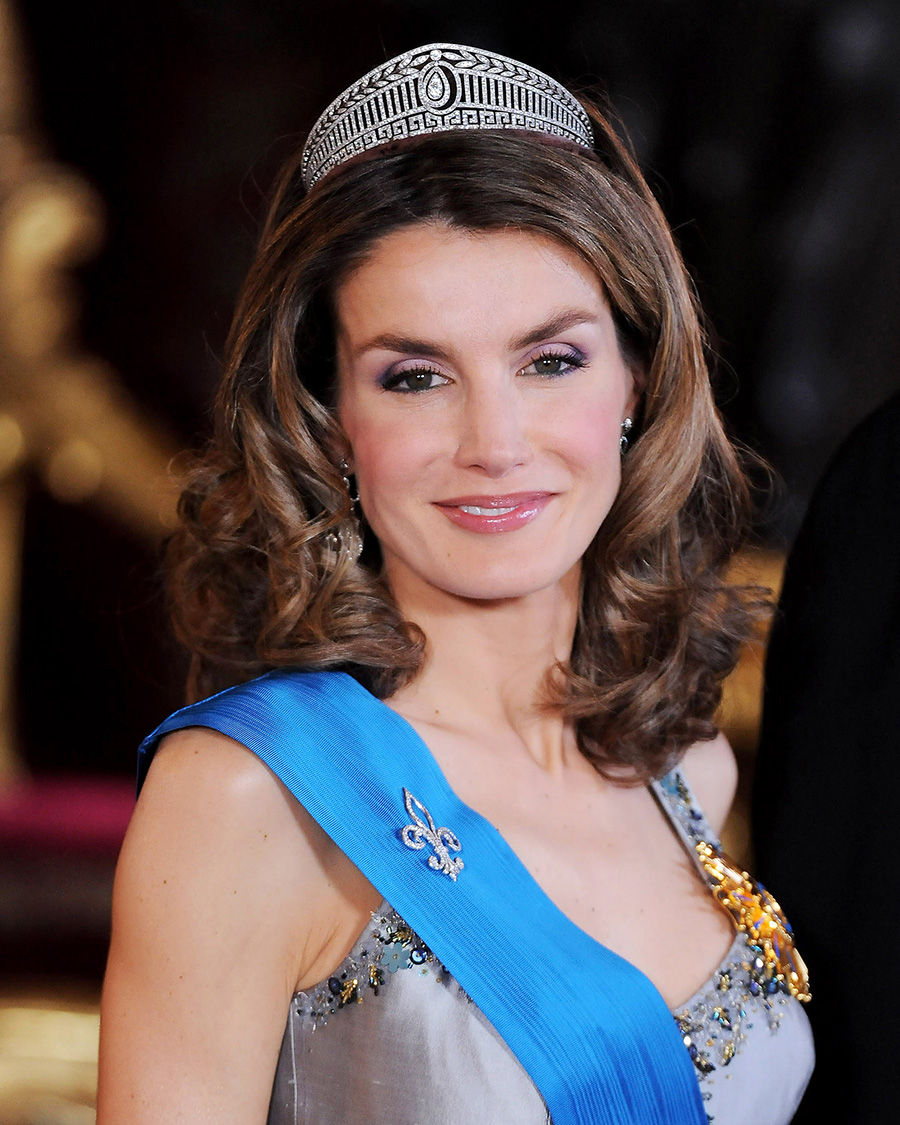
Gerrish agrees, observing that the tiara complements the queen consort because of its precision and discipline. Its symmetrical, architectural design is boldly graphic, free of softness or excess. That aesthetic mirrors Letizia’s approach to jewelry: she gravitates toward pieces that register instantly, photograph crisply, and project authority without unnecessary ornament.
Rato noted,
Today, the Prussian Tiara is most closely associated with Queen Letizia of Spain, who has transformed the historic piece into a signature element of her modern royal wardrobe. While its origins lie in German court jewelry, the tiara now feels unmistakably Spanish thanks to her frequent and confident use of it at state banquets and diplomatic receptions.
She also wears a diamond and white gold ring set in white gold made by Spanish jewelry brand Suárez. While it veers off from the typical royal style, her choice reflected a sleek, contemporary sensibility. She wears it with a plain gold wedding band from Spanish jewelry designer Karen Hallam.
Another key piece is the pearl necklace tradition. Originally associated with Queen Victoria Eugenie of Spain, the strand features large, carefully matched natural pearls finished with a diamond clasp — understated in structure but monumental in symbolism. Queen Letizia of Spain has worn it repeatedly, treating it less as a statement jewel than as part of her institutional wardrobe.