Editor’s Note
This article highlights how the Hong Kong International Jewellery Show serves as a launchpad for mainland exhibitors, featuring the innovative “Hard Pure Gold” material—harder, brighter, and lighter than traditional gold—as they seek global recognition.
The Hong Kong International Jewellery Show is providing a springboard for overseas expansion by showcasing innovative “Hard Pure Gold,” a material that is harder, brighter, and lighter than traditional gold, as mainland exhibitors seek international recognition.
The “Hard Pure Gold” standard, outlined by China’s Ministry of Industry and Information Technology last May, stipulates that this type of jewelry must have a Vickers hardness of no less than 60HV and a gold content of at least 99.0 percent.
This technology optimizes the properties of gold jewelry without altering its gold content, explained Chen Yu Jie, General Manager of Trade at Shenzhen Guanhua Jewelry Co. Ltd., one of the pavilion’s exhibitors.
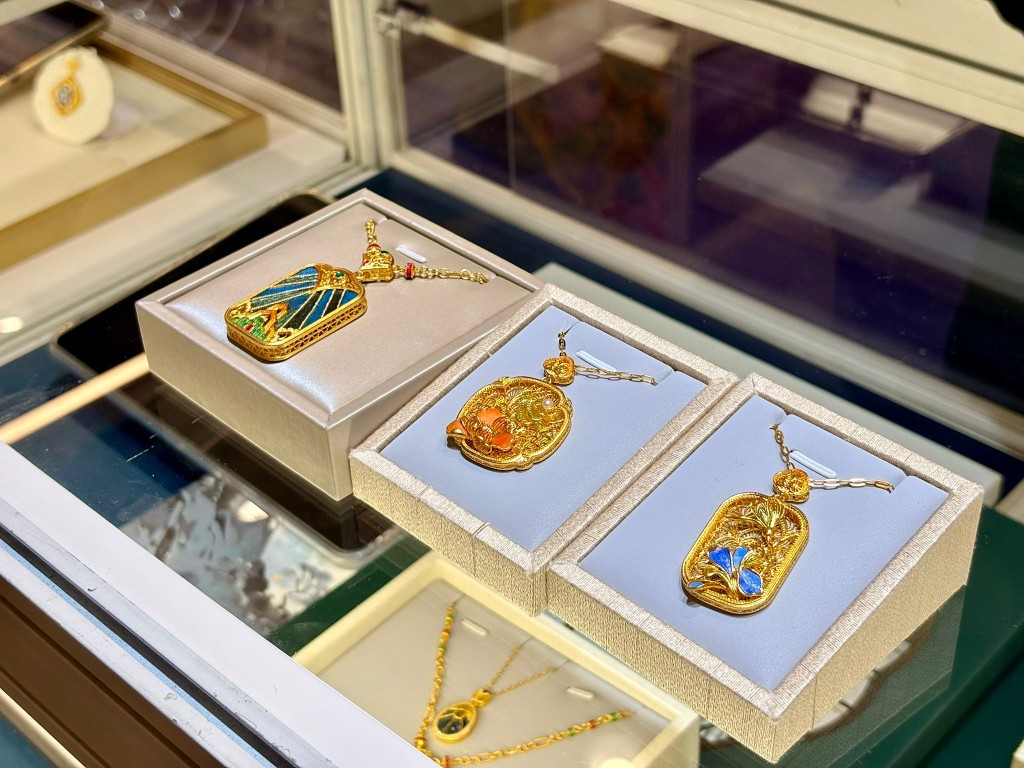
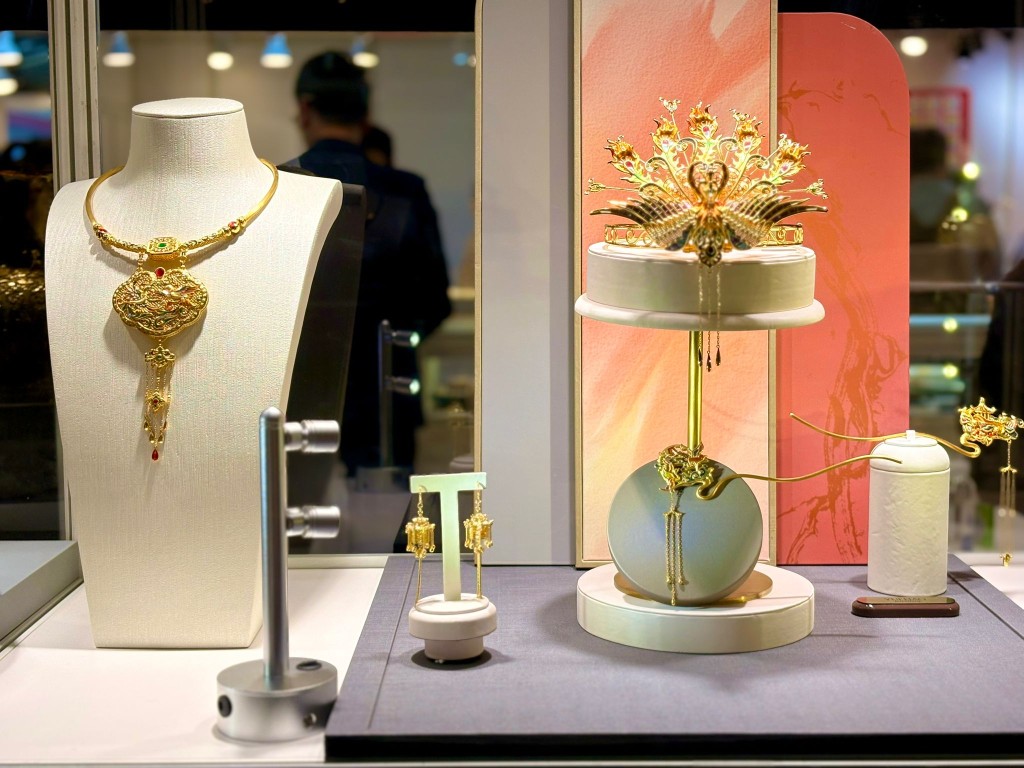
Sharon Weng, Group VP of Branding & PD at Shenzhen Yuehao Jewelry Co., Ltd., one of China’s leading gold manufacturers, explained that because the gold is hardened, it allows for intricate and trendy styles that were previously impossible.
Their Hard Pure Gold jewelry collections include voluminous hollow designs and cross-material integrations with diamonds, feathers, agarwood, and shells.
The dedicated “Hard Pure Gold Pavilion” features 11 exhibitors from the mainland, led by the World Gold Council, showcasing gold manufacturing technology designed to meet modern demands for both aesthetics and durability.
Amid continuously rising gold prices, Weng believes these lighter products are increasingly welcomed by the market due to their more accessible price points.
While the main markets are still centered in Southeast Asia, particularly in Singapore and Malaysia with their large Chinese communities, Weng noted that fashionable pure gold products are beginning to attract a small client base in Europe and the United States, which have not traditionally favored pure gold.
However, she pointed out a significant challenge that in many countries, gold is treated as hard currency, facing high taxes or even export restrictions.
The unfamiliarity of overseas consumers with pure gold requires substantial investment in market education, she said.
He identified the Middle East and India as high-potential markets, as consumers in these regions have a strong cultural demand for gold and face budget constraints amid soaring prices, but still desire large, extravagant designs.
Hard Pure Gold products, which “retain purity and reduce weight without changing the size,” perfectly meet this demand, he noted, adding that South Korea also shows market potential.
Expanding into emerging overseas markets is a key mission for the fair’s organizer, the Hong Kong Trade Development Council (HKTDC), aligning with the government’s establishment of a Task Force on Supporting Mainland Enterprises in Going Global last year.
Chen believed that Hong Kong serves as a crucial transit port, stating that exporting goods to Hong Kong first and then re-exporting them to other parts of the world is procedurally simpler and potentially more cost-effective than exporting directly from the mainland.
He expressed satisfaction with the HKTDC’s efforts to highlight the Hard Pure Gold pavilion, which significantly increased exhibitors’ exposure and created excellent opportunities to connect with overseas buyers.
Weng also praised the HKTDC’s assistance during the exhibition, particularly in connecting exhibitors with prestigious media outlets, which effectively boosted global exposure for their products and technology.