Editor’s Note
**Editor’s Note:** This piece explores the art of transforming historical objects into desirable modern treasures, tracing a lineage from Bulgari’s ancient coins to César’s experimental creations—a practice that magnifies the past without erasing it.
From ancient coins at Bulgari to the experiments of César, recycled jewelry is part of a long history: that of magnifying the existing without ever erasing it.
by Benedicte Burguet
Coins, first. Perhaps the most classic form of upcycling. How many families once had their Napoleons set into bracelets, transforming a monetary inheritance into a heirloom piece? This logic, the Italian house Bulgari has elevated into a signature with its Monete collection. Here, ancient coins, preserved in their integrity, are set into contemporary creations. In a more confidential register, Marie Starek extends this aesthetic by offering unique or numbered series pieces crafted from genuine ancient coins.
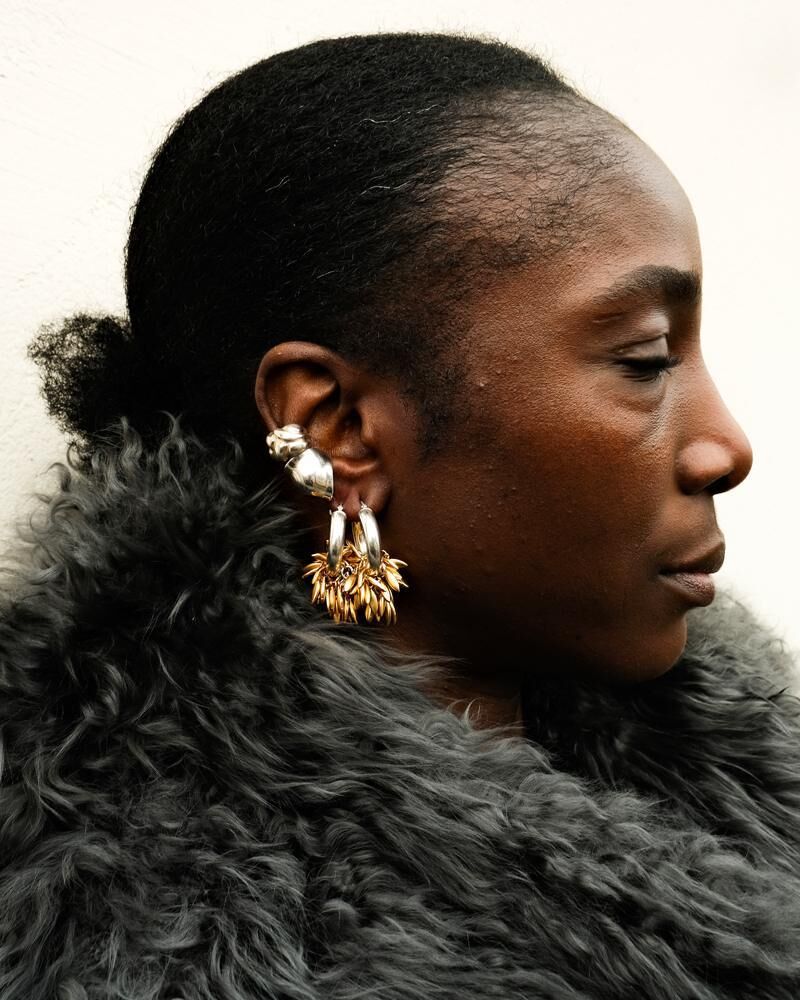
More audacious, some houses shift the cursor further by making scraps a raw material in their own right. Arthus Bertrand, with its Fragments of Luck collection developed alongside the fashion brand Roseanna, offers a particularly apt reading. Manufacturing surpluses, medal counterforms, workshop rejects become the founding elements of new jewelry. The challenge then goes beyond mere waste reduction. It is about producing a coherent aesthetic where the recycled imposes itself as fully desirable.
At Anicet, upcycling involves a true compositional work for the making of its jewelry. Winner of the 2025 Grand Prix de la Création de la Ville de Paris, the creator disassembles old chains (down to the most ordinary cutlery), fragments them, then reassembles them into a new writing. Like many houses of her generation, she chooses these materials for their ethical scope, but also for their memorial charge. The jewel then becomes an object of passage:
For others, like Juliette, founder of LOE Studio, the challenge is more frontal:
In all cases, this process requires increased creativity and a reversal of the gesture. Where jewelry traditionally begins with drawing, upcycling imposes starting from the existing.
Same observation at Camille Toupet, artistic director of Arthus Bertrand:
Diverted, certainly, but never denatured.
