Editor’s Note
**Editor’s Note:** This week’s figure highlights the dual role of gold in Lebanon’s economy—both as a top export and a key import, bolstered by favorable tax exemptions that treat raw gold as a monetary asset.
Raw gold and jewelry are among the pillars of Lebanon’s foreign trade. Depending on the year, they regularly rank among the top two or three export categories, while also constituting a major import item, supported by intense processing and re-export activity.
Lebanese legislators classify raw gold, ingots, and bars as monetary assets, thus exempt from customs duties. They also benefit from a value-added tax (VAT) exemption, under implementing decree No. 7338 of Law No. 379 on VAT. This exemption also extends to certain raw materials used in the manufacture of jewelry pieces.
This tax advantage, to which the Lebanese authorities remain committed, serves several objectives: supporting a historically dynamic jewelry sector, encouraging re-export after processing to generate foreign currency flows, and preserving gold’s role as a safe-haven asset and savings instrument in the local economy.
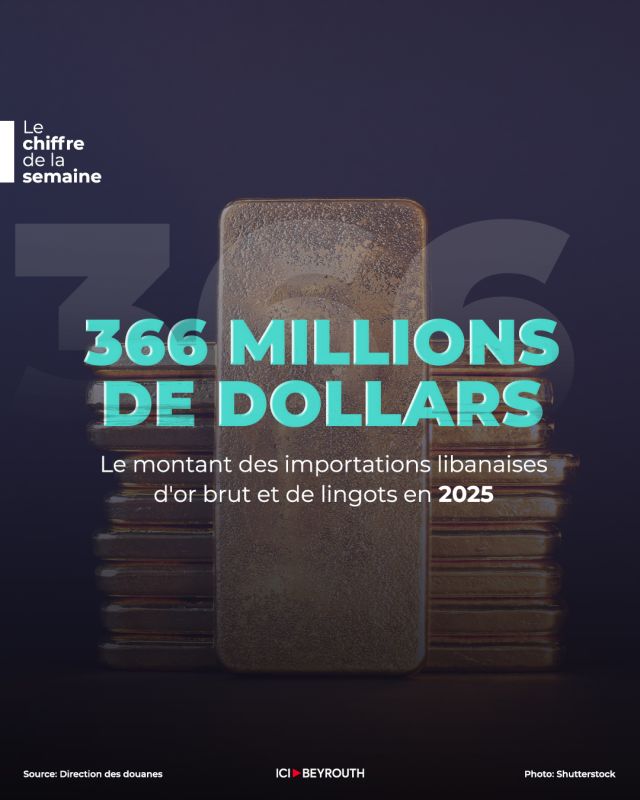
Over the past decade, Lebanon imported $12.8 billion worth of raw gold and ingots. In detail, these imports amounted to $73 million in 2021, $114 million in 2022, $231 million in 2023, $246 million in 2024, and $366 million in 2025, according to Customs Directorate statistics. During the same period, the country exported $217 million in raw gold and ingots, as well as $5.62 billion in jewelry pieces.