Editor’s Note
**Editor’s Note:** This piece explores how ORSIA reimagines Korean traditional aesthetics in its latest wedding ring collection, blending timeless symbolism with modern design to create pieces that carry deeper meaning for couples.
Wedding rings are more than just symbolic accessories; they are proof that two people are one. This is why they are one of the most important parts of wedding preparations. While beautiful designs and sparkling gems can make a couple shine, what if the rings also carry their shared meaning and time?
ORSIA, a brand that has been crafting wedding jewelry for over 50 years, presents a collection that reinterprets Korean tradition in a modern way, exploring the relationship between the bride and groom.
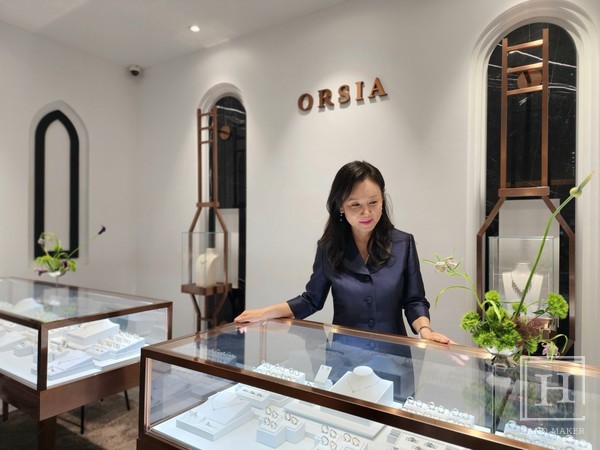
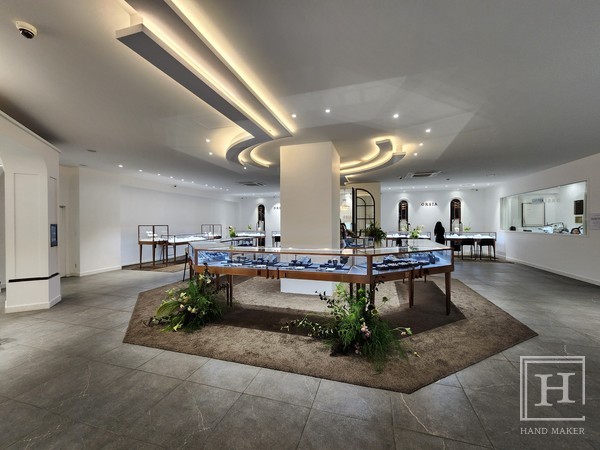
ORSIA held its 53rd Anniversary Heritage Special Exhibition, “Time Crafted: Korean Heritage,” at its Cheongdam-dong showroom on the 28th. The event centered on a docent tour introducing the brand’s philosophy and signature collections. As a professional curator shared the stories woven into the jewelry collections, it felt less like a simple brand introduction and more like an art exhibition.
Regarding introducing the jewelry brand through a special exhibition, ORSIA CEO Han Young-jin explained:
The main theme of this collection and the key message of the exhibition is ‘Value crafted through time, beauty connected to Korean aesthetics.’ The curator in charge stated:
The 53rd-anniversary signature collection consists of four lines: DANA, OROT, E:UM, and HONDI. Each collection is inspired by tradition, marking the brand’s first signature collection and symbolically imbued with the meaning of the ‘relationship between two people’ that a bride and groom create.
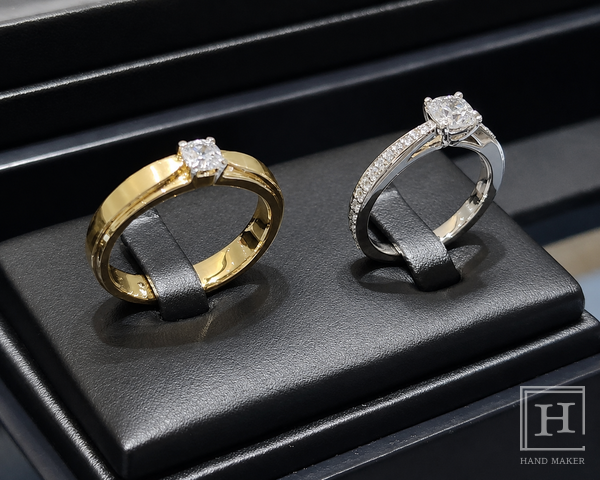
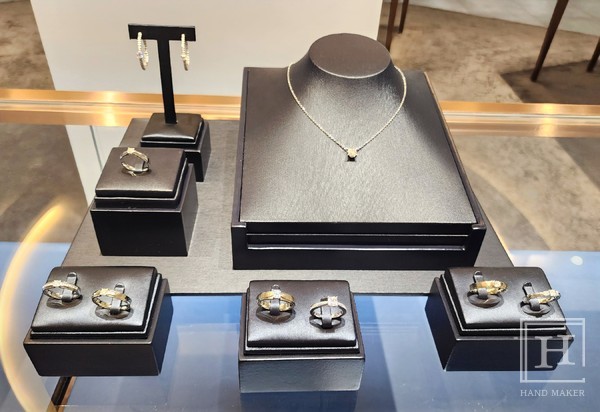
The DANA collection draws inspiration from the silhouettes of the ‘jokduri’ (traditional bridal crown) and ‘samo’ (traditional groom’s hat) used in Korean weddings. True to its name, the design features the elegant curves of the jokduri and samo seemingly embracing diamonds. As these are wedding bands for the couple, the connection to traditional wedding headpieces feels deeply meaningful, as no ceremony defines a couple’s relationship as clearly as a wedding. The necklace shows how the jokduri shape is interpreted in a modern way: the diamond and its four prongs reveal the form of the jokduri, yet when worn, the shape is not overtly visible. The simple design suits the name ‘Dana’ (meaning elegant).
The curator explained:
The OROT collection takes its motif from the eaves of traditional Korean architecture. It captures the beauty of the slightly upturned eaves curve, and like the ‘chunyeo’ (rafter) supporting that curve, it represents two people supporting each other and becoming one. The curator described it as a ‘bold design’ because, unlike typical jewelry, it is an open type with a hollow center. The slightly raised ends, reminiscent of beautiful eaves tips and their supporting rafters, meet in a single straight line to form rings and bangles, much like how marriage is often described as two people becoming one.
The collection inspired by traditional architecture continues with E:UM. True to its name, ‘E:UM’ (meaning connection) signifies firmly connecting two people. It directly borrows the structure of Hanok pillars interlocking with each other. In building a Hanok, the method of carving grooves into wood to make them interlock tightly is called ‘gyeolgu’ (structure), and ‘gyeolhon’ (marriage) shares the same ‘gyeol’ character. While perhaps a coincidence, it shows that ORSIA considered more than just design when creating this collection. Another ‘connection’ can be found in the E:UM collection: like the interlocking method of Hanok, it uses ceramic materials to create a harmonious design resembling multiple rings worn together. This is ORSIA’s own patented signature collection, extending beyond wedding bands to everyday jewelry. The meeting of metal and ceramic used in the jewelry also mirrors two different people meeting to form a strong relationship. The curator noted:
The HONDI collection is a modern reinterpretation of the stone walls of traditional Jeju Island houses, which are shaped and refined by strong winds without being shaken. It captures the natural, unrefined appearance created by the stone walls and wind. The collection features angular octagonal designs linked together, like stones smoothed by the passage of time. While a couple’s life after marriage will be filled with happy times, there are also times of adjustment as they discover each other’s differences, a process akin to wind-sculpted stone walls. ‘Hondi’ means ‘together’ in the Jeju dialect, making it a fitting name for a couple who will journey through life together.
The ‘Premium Tiara Zone’ drew significant attention at the exhibition. Alongside its jewelry collections, ORSIA has dedicated effort to tiara crafting. Starting with producing the tiaras for the ‘Miss Global Queen’ pageant for five consecutive years from 2015, ORSIA also crafted the tiaras for Miss Korea’s Jin, Seon, and Mi winners in 2022 and 2023.
The curator explained:
The premium tiara ‘Ohwa,’ created in 2020, is inspired by a phoenix soaring into the sky. According to the curator, ‘Ohwa’ also represents the traditional Confucian virtues of ‘In, Ui, Ye, Ji, Shin’ (benevolence, righteousness, propriety, wisdom, and trust). Thus, the tiara symbolizes a woman of dignity and self-identity. The value of the Ohwa tiara is estimated at a staggering 1.7 billion KRW. It is set with a total of 778 brilliant-cut diamonds weighing 75.07 carats.
Next to it were the Miss Global Queen tiara and the Miss Korea Jin tiara. Given that they are awarded to women who reach the highest pinnacle of beauty, their tall and exquisitely crafted designs are captivating. Visitors could try on the tiaras, including one worn by BLACKPINK’s Rosé for a photoshoot in 2025, which drew keen interest from influencers. ORSIA’s tiaras have appeared on numerous celebrities and in media, distinguishing themselves in design.
According to an ORSIA official, these tiaras are not for sale but are available for loan exclusively to brides who have contracted for wedding bands. The official explained:
The roots of the ORSIA brand, spanning over 50 years, began in a small workshop in an alley in Jongno. In 1974, a crafting workshop named ‘Youngjinsa’ was founded by Ms. Song Young-ja, the mother of ORSIA CEO Han Young-jin. Named after her daughter, the workshop was dedicated to ring crafting, showcasing a spirit of craftsmanship. Growing up using his mother’s workshop as his playground, CEO Han Young-jin began continuing his mother’s technical legacy in 2001, creating the ORSIA of today.
The place that best embodies this craftsmanship is the Design Development Lab. The curator said:
The workshop and design lab are currently registered as a design research institute certified by the Korea Institute for Advancement of Technology (KIAT). This space feels unfamiliar yet trustworthy. While it might seem out of place in Cheongdam, it visually conveys the brand’s genuine commitment to design and craftsmanship. It was a unique experience to see artisans passionately focused on jewelry crafting and design, unconcerned with outside perceptions.
The pride in jewelry making extends to monthly purity tests. These random monthly tests verify the exact karatage of gold used in the jewelry by entrusting it to a professional gold hallmarking assay office. This reflects ORSIA’s philosophy of ‘being honest even in unseen places.’
ORSIA’s special exhibition was not merely a display of dazzling wedding jewelry. It was a showcase of how Korean tradition, craftsmanship, and the meaning of the marital relationship can be encapsulated within modern design.