Editor’s Note
**Editor’s Note:** Jewelry and watch sales have surged roughly 50%, fueled by a rise in marriages, a strong stock market, and semiconductor industry bonuses. As handbag demand slows, high-end jewelry and watches are emerging as new luxury growth drivers, reshaping department store sales dynamics.
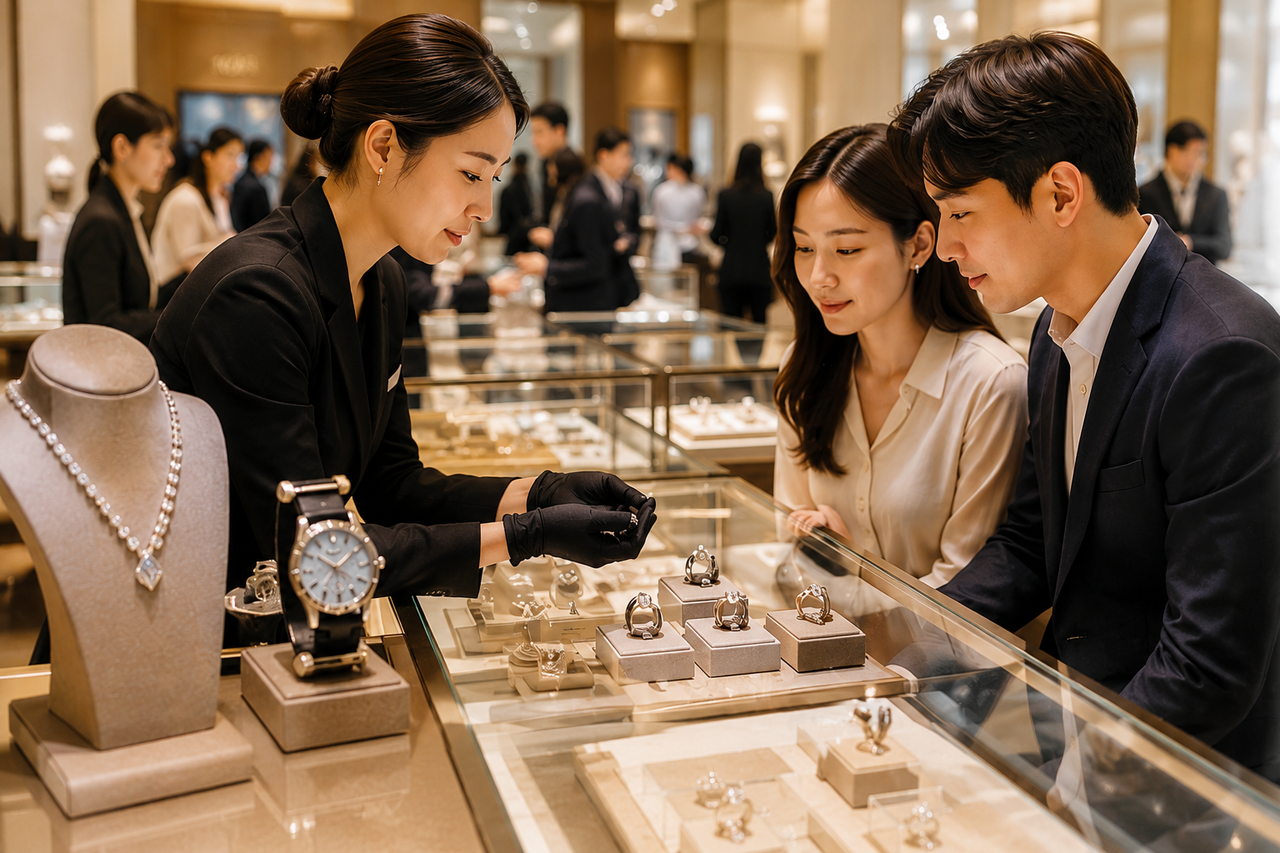
Jewelry and watch sales are surging by around 50%, driven by an increase in marriages, a strong stock market, and performance bonuses from the semiconductor industry’s recovery. Once considered a symbol of wedding gifts, jewelry is now emerging as a centerpiece of luxury consumption. While demand for handbags, which previously led luxury market growth, has slowed, high-end jewelry and watches are becoming new growth drivers. The landscape of department store luxury sales is rapidly changing, fueled by rising marriages, a bullish stock market, and bonuses from improved semiconductor business conditions.
In particular, jewelry and watch sales are soaring in southern Gyeonggi Province, where semiconductor companies like Samsung Electronics and SK Hynix are concentrated. Luxury consumption, once centered in Seoul’s Gangnam area, is spreading to semiconductor industry clusters such as Yongin, Pangyo, Dongtan, and Gwanggyo, creating new VIP commercial districts.
According to the retail industry on the 31st, the growth rate of jewelry and watch sales at the three major department stores in the first quarter of this year significantly outpaced overall luxury sales growth.
At Shinsegae Department Store, luxury sales increased by 29.8% year-on-year in Q1, while jewelry sales rose by 55.6% and watch sales by 36.9%. Lotte Department Store saw overall luxury sales grow by 30%, but luxury jewelry and watch sales surged by 55%. Hyundai Department Store also reported a 30% increase in luxury sales, with jewelry and watch sales up by 50.2%.
Considering that overall department store sales growth remained at 7-12%, it is assessed that jewelry and watches drove a significant portion of this year’s luxury market growth.
The increase in marriages is cited as a key driver of jewelry demand. According to the Korean Statistical Information Service (KOSIS), the number of marriages in Q1 this year was 62,309, up 6.1% year-on-year, the highest for a first quarter since 2018.
Changes in consumption trends have also played a role. Among younger generations, there is a growing tendency to reduce spending on wedding venues, studios, dresses, and makeup, and instead increase expenditure on jewelry and watches, which hold long-term value.
In the wedding gift market, demand is steadily expanding beyond diamond rings to include luxury watches and high jewelry. This indicates a shift towards consumption that considers asset value and scarcity, rather than mere accessories.
The semiconductor super-cycle is also a key factor driving high-end consumption. Major semiconductor companies like Samsung Electronics and SK Hynix have paid large performance bonuses, and rising stock prices have boosted asset effects, increasing consumer spending power.
This trend is evident in the performance of major stores in southern Gyeonggi Province. At Shinsegae South City, jewelry sales from May 1-20 increased by 146.3% year-on-year, and watch sales by 85.3%. Overall luxury sales also rose by over 50% during the same period.
Lotte Department Store’s Dongtan branch saw luxury sales increase by 40% this year. Hyundai Department Store’s Pangyo branch reported a 66.0% increase in jewelry and watch sales, while Galleria Gwanggyo’s luxury jewelry and watch sales rose by 46%.
The retail industry views southern Gyeonggi Province, with its concentration of semiconductor industry workers, as an emerging luxury consumption hub. VIP consumption, once centered on Gangnam and flagship stores, is expanding to areas near high-tech industry clusters.
Department stores are also accelerating efforts to capture demand. Shinsegae Department Store launched an Asia-first pop-up store for British high jewelry brand Jessica McCormack, while Lotte Department Store opened a store for ‘Cloi Sou’, founded by cloisonné master Lee Soo-kyung, at its main branch’s Avenue L. Hyundai Department Store and Galleria are also competing to attract global watch and jewelry brands.
Despite the growth in the consumer market, concerns are rising that the competitiveness of the domestic jewelry industry is weakening.
According to the ‘Korea Jewelry Export-Import Trends 2025’ report by the Wolgok Jewelry Industry Research Institute, exports of jewelry and imitation personal adornments fell by 22.2% year-on-year to $517.74 million last year. In contrast, imports increased by 29.1% to $1.74062 billion. The trade deficit reached $1.22288 billion, marking a 13th consecutive year of deficit.
Jewelry imports alone hit a record high for the fifth consecutive year at $1.56401 billion. Products from France, Italy, Switzerland, and the U.S. accounted for 86.1% of total imports, further strengthening the dominance of foreign luxury brands.
The share of imported jewelry in the domestic market is also rapidly expanding. Imported jewelry’s market share rose from 25.6% in 2021 to 38.9% last year. Meanwhile, domestic jewelry is struggling in both domestic and export markets due to rising raw material prices, lack of brand competitiveness, and limited global recognition.
The industry expects the jewelry market’s growth to continue as long as marriages increase and the semiconductor sector remains strong. However, experts suggest that for domestic companies to translate growth opportunities into profits, they need to move beyond price competition and adopt premium strategies emphasizing design, brand storytelling, and craftsmanship.
Reporter: Ryu Bin, Women’s Economic Daily
[email protected]
*This article was written by a reporter or external contributor and then proofread and edited using AI. AI-generated images included in the article are indicated in the photo captions.