Editor’s Note
**Editor’s Note:**
As Gen Z becomes the dominant force in the wedding industry, bridal jewelry is pivoting from quiet minimalism to bold maximalism. The 2026 season signals a return to volume, layering, and statement pieces, with yellow gold reclaiming its spotlight. This shift, backed by Zola’s largest-ever survey of over 11,500 couples, marks a definitive generational change in taste and tradition.
After seasons dominated by quiet luxury, minimal lines, and formal discretion, the world of bridal jewelry is preparing for one of the most distinct aesthetic transformations in recent years: 2026 marks the return of significant volumes, layering, and highly recognizable pieces. This generational shift is certified by Zola’s First Look Report 2026, the largest-ever survey of the sector, interviewing over 11,500 couples: for the first time in history, Generation Z represents 51% of engaged couples, officially surpassing Millennials. With the oldest Gen Z members reaching the average marriage age of 28, this generation is no longer a “trend to watch” but the primary driver of the wedding industry. Alongside the return of maximalism, yellow gold is also strongly re-emerging at the center of bridal collections in bold and dramatic versions.
Parallel to this, demand for highly personalized experiences is growing: according to The Knot Worldwide’s Real Weddings Study 2026, 90% of couples desire a custom-built ceremony, while 61% choose to write their own wedding vows. As confirmed by the Bridebook’s UK Wedding Report 2026, it is no coincidence that this same generation is 25% more likely than previous ones to choose a place of worship for their wedding, and this has little to do with religion. Stone walls, vaulted ceilings, stained glass, candlelight: the visual language of churches perfectly matches the dark romance, gothic cottagecore, and “old soul” aesthetic that defines Gen Z culture on Pinterest and TikTok.
In this context, attention to savings and innovation is also growing: 61% of engagement rings purchased now feature a lab-grown stone, a 239% increase compared to 2020. The organizational process is also changing: the use of artificial intelligence tools in wedding planning has nearly doubled in just one year, rising from 20% to 36% of couples involved.
This paradigm shift is outlined by major international wedding industry research analyzed by the #BrandGioielli Observatory, a reference point in the contemporary jewelry sector, which depicts a market increasingly oriented towards personalization, product versatility, and identity-building in the wedding experience. 2024 represented the peak of essentiality: thin rings, light necklaces, and minimal earrings. In 2025, the first signs of change emerged, with the return of pearls and significant pendants. Today, the pendulum of bridal fashion has definitively changed direction. A clear message comes from the Fall/Winter runways: jewelry returns as a protagonist. It is no coincidence that, according to The Sun, 82% of Gen Z respondents say they feel pressure to look perfect on their wedding day: the wedding has become a space for identity representation before even sentiment, and jewelry is its most immediate tool. Sculptural necklaces, chandelier earrings, stacked bracelets, and multiple rings define an aesthetic focused on stage presence and stylistic intent, while “more is more” establishes itself as the new reference for the season.
The transformation of bridal 2026 is articulated through 10 evolutionary directions that are redefining the aesthetics, values, and habits of couples. Here they are:
1. Reusability at the center: growing demand for models or jewelry that can be reused in everyday life;
2. Lab-grown diamonds: laboratory-grown stones become the dominant choice for engagement rings, increasingly perceived as aesthetically valid and economically convenient;
3. Return of maximalism: sculptural necklaces, chandelier earrings, and bracelet layering replace the minimalism of recent years;
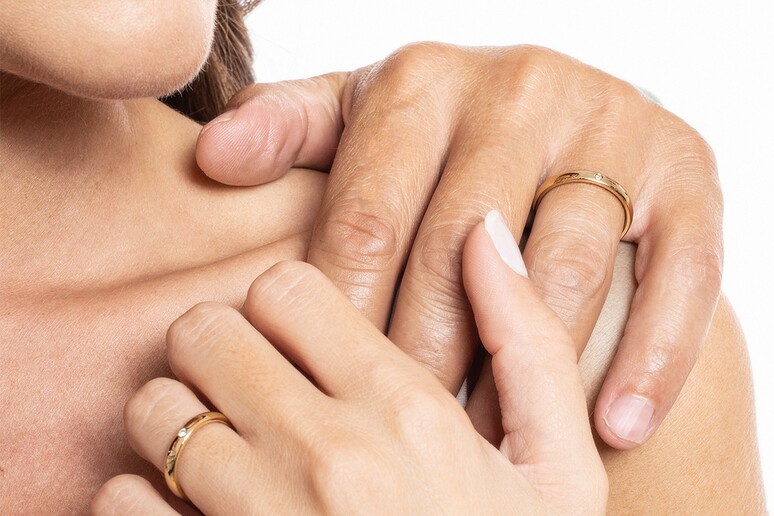
4. Yellow gold as protagonist: the most classic metal returns in increasingly dramatic bold versions;
5. Extreme personalization: engravings, symbols, and unique details transform jewelry into an identity narrative;
6. Artificial intelligence in wedding planning: more and more couples use AI tools to organize and personalize their wedding;
7. The aesthetic of the sacred as a backdrop: Gen Z chooses places of worship for their weddings more frequently than previous generations—not for religious reasons, but aesthetic ones;
8. Wedding planning begins before the “yes”: nearly one in five couples enters full organizational mode even before the official engagement;
9. TikTok as a primary source of inspiration: the platform becomes the visual reference par excellence in wedding planning, surpassing traditional channels like magazines and blogs;
10. Wellness as a pre-wedding investment: couples dedicate time and resources to beauty routines, physical health, and mental well-being in preparation for the big day.