Editor’s Note
**Editor’s Note:** This article highlights the staggering tenfold surge in precious metal exports from Arezzo to Switzerland in Q1 2026, propelling the province to the top of Italy’s export rankings. The data underscores a dramatic shift in trade dynamics worth monitoring.
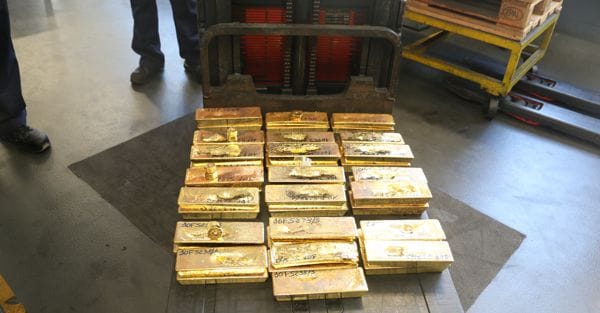
From 485 million to over four billion euros. This surge—the exponential increase in precious metal sales from the Arezzo district to Switzerland—is the main driver of national export statistics. In the first quarter of 2026, these values nearly multiplied by ten compared to the same period in 2025.
Arezzo, in fact, thanks to this surge, is the best-performing Italian province in the January-March period, with export values nearly doubling, placing it third among exporting provinces behind Milan and Florence. Twelve months earlier, it was only tenth. Metal banks and refiners in the district achieved an absolute record, exporting over six billion euros in precious metals in the quarter (to Switzerland and the rest of the world), triple the amount from the same period in 2025, and accounting for 60% of the national total for this product category. Italy’s total quarterly export for this category reached 10.3 billion euros, double the January-March 2025 period.
For Arezzo, exported precious metals in the quarter reached over six billion euros, up from 1.8 billion twelve months earlier. This is the best quarter in history, driven by rising prices but especially by increased volumes.
As a result of this surge, Tuscany is by far the best-performing region in the first quarter in terms of export growth, with an increase of over 30%. This leap allows it to narrowly surpass Emilia-Romagna (and Veneto), positioning it behind Lombardy for the first time.
The rise in gold prices certainly supports these values, with the yellow metal’s price surging an average of over 50% in 12 months, but this alone does not explain the growth. Another factor is the weakness of the other historical outlet for Arezzo’s companies: domestic demand.
Switzerland has also become the primary market for jewelry exports, with a 54% surge in the first two months (Federorafi data), despite a general downturn in the sector. What is now happening with Berna is similar to what occurred two years ago with Turkey for contingent reasons. This time, it involves Arezzo’s semi-finished products, imported heavily due to Turkish regulations that penalize the import of pure metal. Turkish jewelers, who also had to pay a duty on non-EU gold (previously purchased from Switzerland or the UAE), found it advantageous to buy products as raw as possible but already partially processed in Arezzo, then melt and rework them for domestic production. This trend has now subsided, with jewelry exports to Ankara returning to normal levels of just over 50 million euros per quarter, down from 1.5 billion at the end of 2024.
In the first quarter, jewelry exports from Arezzo actually collapsed, more than halving to 720 million euros. In contrast, the Alessandria district saw an increase (+56%), but nationally, the decline in value was 14.2%, reaching 2.8 billion euros.