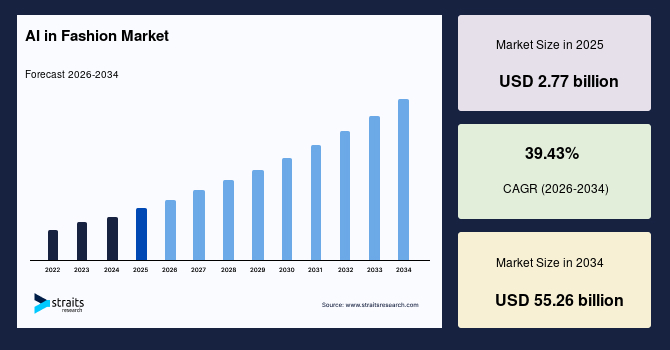
The global AI in fashion market, valued at USD 2.77 billion in 2025, is projected to surge to USD 55.26 billion by 2034 at a CAGR of 39.43%, according to a new report. For jewelry supply-chain buyers, this signals accelerating adoption of AI tools in product design, demand forecasting, and inventory management, directly impacting sourcing strategies for rings, necklaces, bracelets, and other accessories. Understanding these trends is critical for staying competitive in OEM/ODM and private-label operations.
Market Growth Drivers
AI-powered recommendation systems are enhancing customer shopping experiences by delivering personalized product suggestions based on browsing history, purchasing behavior, and style preferences. This personalization drives brand loyalty and sales conversions, particularly relevant for jewelry retailers and marketplaces. Additionally, the growing influence of social media and fast fashion retail is boosting AI adoption in fashion marketing, creating opportunities for AI solutions in jewelry supply chains.
Supply-Chain Impact
AI plays a pivotal role in product design and development, optimizing patterns to maximize material efficiency and minimize waste. For jewelry manufacturers, this means AI tools can streamline design processes for rings, earrings, and bridal collections, reducing costs and supporting sustainability goals. AI also enhances demand forecasting by analyzing social media trends, historical data, and sales patterns, enabling better inventory decisions for sterling silver, stainless steel, and gemstone jewelry.
Compliance and Logistics Signals
Integrating AI into fashion requires skilled professionals with expertise in both fashion and AI technologies. The scarcity of such talent poses a challenge for businesses, including jewelry importers and distributors, seeking to leverage AI effectively. However, AI facilitates sustainable material sourcing by assessing ethical practices, environmental impact, and cost-effectiveness, which is increasingly important for compliance with global trade regulations and consumer expectations.
What Buyers Should Watch
Jewelry buyers should monitor AI adoption in supply chain management and demand forecasting, as these tools can improve lead times and reduce overstock for private-label brands. The market opportunity for AI in sustainable material selection also aligns with growing demand for eco-friendly jewelry, from gold-plated brass to pearl and gemstone pieces. Staying informed on AI trends will help sourcing professionals anticipate shifts in design, production, and logistics.
Source: Read the original report | Published: June 03, 2026