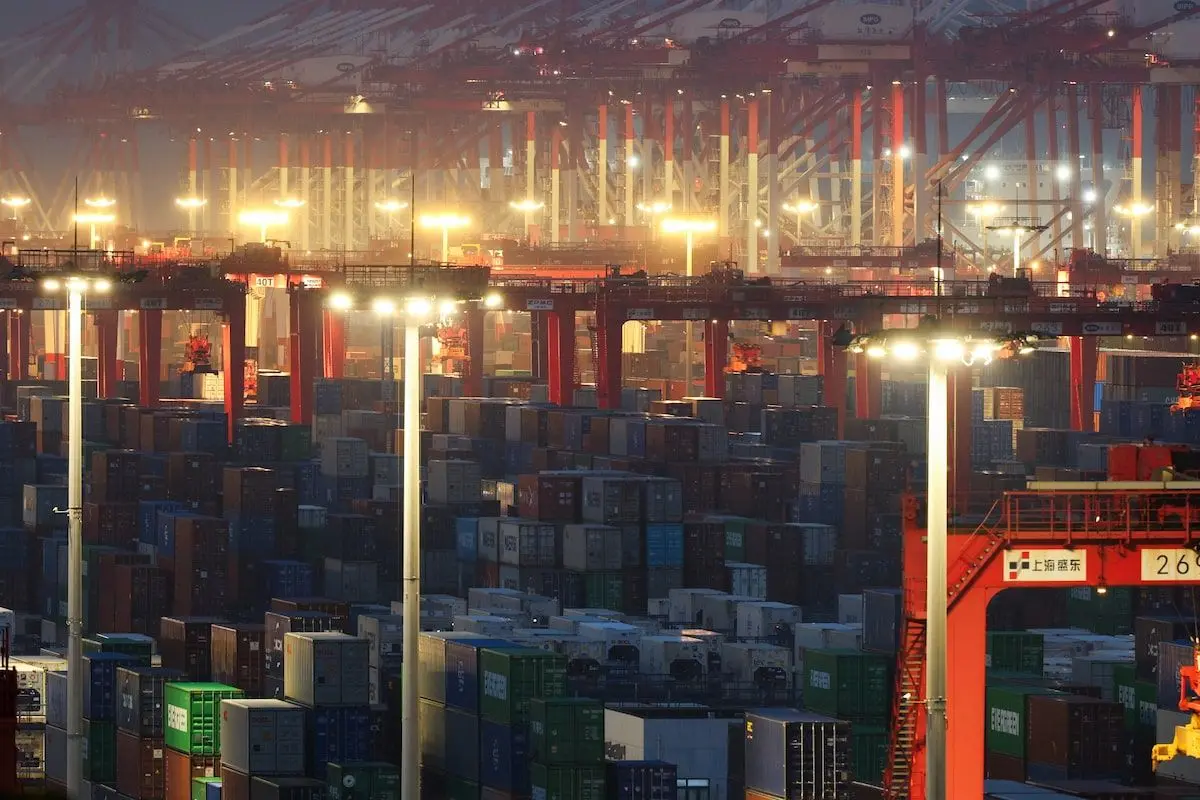
China's outbound shipments surged 19.4% year-on-year to $376.78 billion in May 2026, driven by a global artificial intelligence boom, according to customs data released Tuesday. For overseas jewelry buyers, the export acceleration signals rising costs for key inputs like gold and semiconductor chips, while non-tech sectors such as toys and footwear declined, hinting at shifting manufacturing priorities that could affect jewelry supply chains.
Export growth and trade surplus
China's export growth outpaced April's 14.1% gain and beat economist projections, with imports also rising 27.4% to $271.35 billion, resulting in a monthly trade surplus of $105.43 billion. Shipments to the United States climbed 35.4%, the highest since March 2021, alongside a 110% jump in integrated circuit exports and a 50% increase in high-tech product shipments. This robust performance underscores China's continued dominance in global manufacturing, which directly impacts jewelry sourcing costs and availability.
Impact on jewelry supply chain inputs
Economists at Bank of America Global Research noted that rising input costs, particularly for semiconductor chips and gold, primarily drove the broader import expansion. Gold prices remain elevated, squeezing margins for jewelry manufacturers and importers. Meanwhile, non-tech sectors saw declines, with toy shipments dropping 7% and footwear exports contracting 10.4%, suggesting that production capacity may be shifting toward high-tech goods, potentially reducing capacity for jewelry and accessories.
What buyers should watch
Jewelry buyers should monitor gold and chip price trends closely, as these directly affect production costs for gold-plated brass, sterling silver, and gemstone jewelry. The 20% month-on-month rise in memory chip prices indicates broader semiconductor cost pressures that could impact electronic components in smart jewelry or packaging. Additionally, the decline in new export orders from a two-year peak in April suggests potential softening ahead, warranting careful inventory planning.
Compliance and logistics signals
Geopolitical friction remains a key risk, with analysts warning of possible escalation between China and major trading partners such as Europe. The recent U.S.-China meeting yielded no breakthroughs on tariffs, meaning existing duties on Chinese jewelry imports may persist. Buyers should stay alert to tariff changes and consider diversifying sourcing to mitigate risks, especially for high-volume items like stainless steel and titanium jewelry.
China sourcing context
Despite soaring exports, China's manufacturing employment continues to contract, driven by automation and productivity gains. Domestic demand remains weak, with consumer inflation forecast at just 1.3% in May, contrasting with producer inflation at 3.8%. This divergence means Chinese factories are prioritizing export orders over domestic consumption, which could lead to longer lead times for smaller jewelry orders. Buyers should plan orders well in advance and maintain close communication with suppliers.
Source: Read the original report | Published: June 10, 2026