Editor’s Note
**Editor’s Note:** This article explores a cutting-edge frontier in deepfake detection: identifying AI-generated optical anomalies in reflective and transparent materials. By focusing on subtle physical inconsistencies in “fake optical crystals,” forensic analysts gain a powerful new tool for unmasking synthetic media.
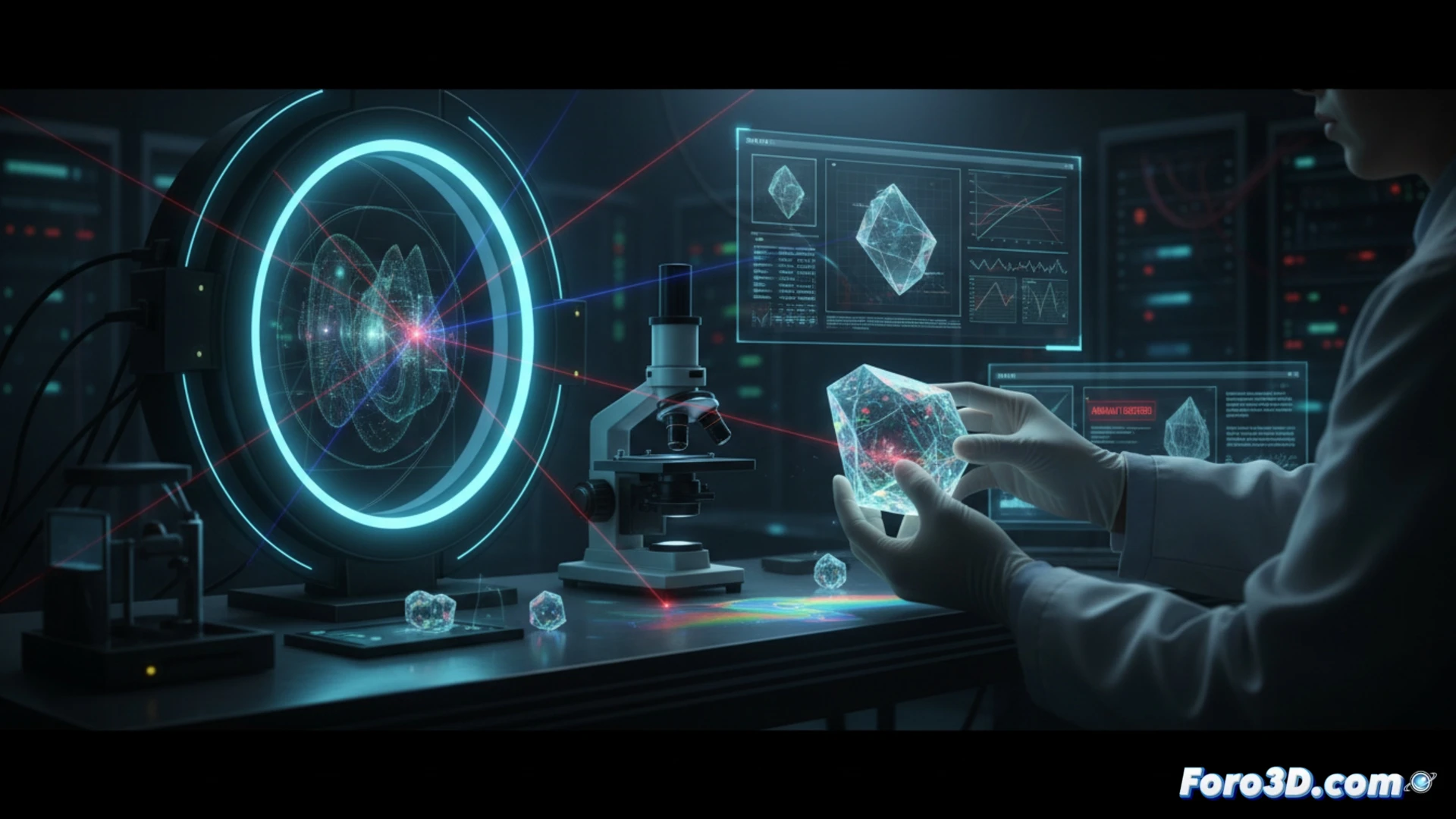
Deepfake detection has evolved beyond simple facial analysis. An emerging field focuses on verifying inanimate materials and objects, such as the so-called “fake optical crystal.” This term refers to reflective or transparent surfaces generated by artificial intelligence that, while visually plausible, contain physical anomalies imperceptible to the human eye. For a forensic reviewer, these imperfections are the key to unmasking digital fraud.
Forensic audit tools rely on principles of optical physics to identify inconsistencies. A real crystal exhibits complex specular reflection patterns and light refraction that follows Snell’s law. In a deepfake, generative algorithms often simplify these phenomena. For example, when analyzing a purported camera lens, 3D forensic software can detect that the simulated refractive index does not match the real material, or that edge distortion (chromatic aberration) is absent. Practical cases include verifying device screens in complaint videos or authenticating crystal-cut jewelry in visual evidence. Tools such as polarized light histogram analysis or 3D scene reconstruction allow pinpointing the exact point where the optical simulation fails.
The proliferation of high-quality deepfakes forces auditors to specialize in materials physics. The concept of “fake optical crystal” reminds us that a deepfake does not only lie about people, but also about the surrounding environment. For the audit professional, the next frontier is not just detecting a fake face, but proving that the scene itself, with its lights and surfaces, is a digital construction. Training in forensic optics thus becomes an indispensable requirement in the fight against visual disinformation.
As the verification of optical elements such as fake crystals in lenses and reflections becomes a new forensic standard, what specific methodology do auditors recommend to distinguish a real manufacturing defect from an AI-generated anomaly in a deepfake video?