Editor’s Note
**Editor’s Note:** This article clarifies the definition and materials of fashion jewelry, highlighting its role as an affordable alternative to fine jewelry. It also notes key market drivers, including rising designer participation and consumer demand for contemporary pieces.
Fashion jewelry is made from affordable, mass-produced materials and typically consists of plated metal, where a thin layer of a more expensive metal is applied over a less costly one. Jewelry pieces under fashion jewelry include settings made of real gold, silver, platinum, as well as semi-precious stones or synthetic gemstones. Jewelry that combines a natural gemstone center with artificially created stones can also be classified as fashion/fake jewelry, thus serving as an affordable alternative to jewelry with precious metals. The increasing number of designers entering the global market and the rising demand for contemporary jewelry are driving market growth.
The rising disposable income of consumers worldwide, driven by economic growth in emerging markets, favors market expansion. Increasing disposable income strengthens consumer purchasing power and affordability, raising their willingness to buy fashion jewelry. Additionally, the growing number of working women and their increasing awareness of modern jewelry trends contribute to accelerating product sales. Affordability, availability of trendy designs, diverse material options, and low maintenance are other key factors boosting product sales.
Strict regulations and standards for materials such as nickel and cadmium in fashion jewelry limit market growth. Compliance with these regulations can increase production costs and restrict the selection of materials used for manufacturing fashion jewelry, affecting product affordability and variety. For example, the Fashion Jewelry & Accessories Trade Association (FJATA), a non-profit organization specializing in regulations for clothing, jewelry, and fashion accessories, enforces ASTM F2923-11 standards and limits the use of cadmium in children’s jewelry. Furthermore, artificial jewelry manufacturers face strong competition from fine and semi-fine jewelry companies. The market is further constrained by a growing consumer base seeking more prestigious accessories.

North America Costume Jewelry Market Size, 2025 (USD Billion)
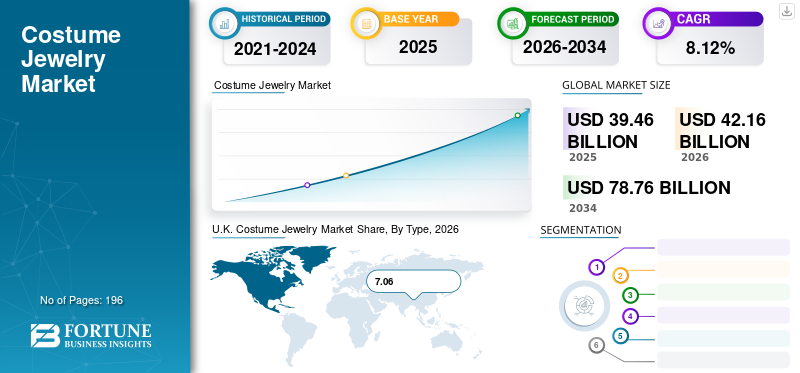
In 2025, Europe held 26.47% of the global market, reaching a value of USD 10.44 billion. In 2026, it is projected to grow to USD 11.27 billion. Europe is expected to continue growing in the coming years due to an increasing trend toward customized jewelry and rising demand for fusion jewelry made from materials such as brass and silver.
Numerous small and medium-sized players shape the competitive landscape. Manufacturers operating in the market focus on research and development of new products made from recycled materials to meet growing consumer demand. They are also launching new innovative designs to achieve product differentiation and stay ahead of the competition.
Key players include:
– DWS Jewellery Pvt. Ltd.

– YIBI Jewelry Co., Ltd. (China)
– Blingy Jewellery Pty Ltd (Australia)
– JewelryBund.com (China)
Fashion jewelry, also called costume or artificial jewelry, is typically made from affordable, mass-produced materials such as plated metals, semi-precious stones, synthetic gemstones, and occasionally real gold or silver coatings. These materials enable trendy, cost-effective accessories that resemble fine jewelry.
Emerging trends include the rise of gender-neutral jewelry, eco-friendly materials, and personalized designs influenced by celebrities and social media. The popularity of lab-grown gemstones and stackable styles is also reshaping consumer preferences.
Leading players include Swarovski, TTT Jewelry, Azone, DWS Jewellery, Kanhai Jewels, JewelryBund, and Viange Vintage. These companies focus on research and development, design innovation, and the use of recycled materials to remain competitive.