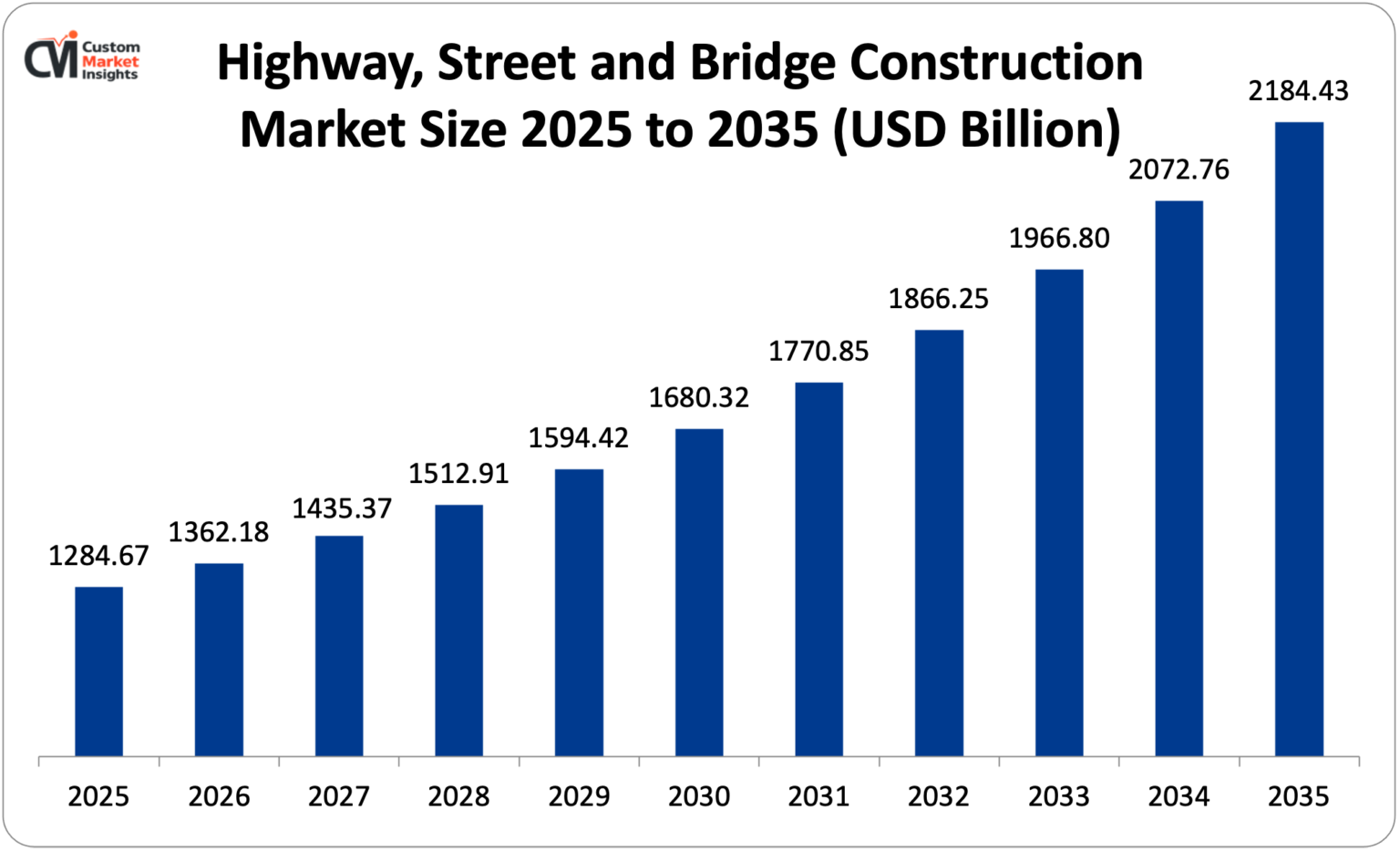
A new report from Custom Market Insights projects the global highway, street, and bridge construction market will grow from USD 1.28 trillion in 2025 to USD 2.18 trillion by 2035, at a CAGR of 4.8%. For jewelry supply-chain buyers, this signals rising demand for infrastructure-linked materials like steel, concrete, and advanced composites, which may affect sourcing costs for metal-based jewelry components and packaging logistics.
Market size and growth drivers
The market was valued at approximately USD 1,284.67 billion in 2025 and is expected to reach USD 1,362.18 billion in 2026, with a forecast of USD 2,184.43 billion by 2035. Key growth factors include government stimulus packages for infrastructure, rapid urbanization, aging transportation networks, and increasing freight and passenger traffic. These trends are particularly relevant for jewelry importers who rely on efficient road and bridge networks for raw material transport and finished goods distribution.
Technology and material innovations
The report highlights advancements such as prefabricated modular parts, 3D printing for bridge construction, ultra-high-performance concrete (UHPC), and IoT-enabled monitoring for predictive maintenance. These innovations improve project speed, cost efficiency, and durability. For jewelry buyers, similar material innovations in steel and composite production could influence the availability and pricing of findings, clasps, and structural components used in high-end jewelry packaging and display fixtures.
Key market players and competitive landscape

Major companies in the market include China Communications Construction Company Ltd., China State Construction Engineering Corporation, ACS Group, Vinci SA, Bouygues Construction, Bechtel Group Inc., Fluor Corporation, Skanska AB, Balfour Beatty plc, Strabag SE, and Hochtief AG. These firms are investing in sustainable materials and smart infrastructure, which may indirectly affect the supply chain for metal and mineral inputs used in jewelry manufacturing.
Compliance and logistics signals
As governments worldwide increase infrastructure spending, jewelry importers should monitor potential impacts on transportation costs and delivery timelines. Improved road and bridge networks can reduce logistics bottlenecks, while material price fluctuations for steel and concrete may affect the cost of jewelry packaging, display stands, and retail fixtures. Buyers should also watch for regulatory changes in construction standards that could influence sourcing from regions with major infrastructure projects.
China sourcing context
China's leading construction firms, such as China Communications Construction Company and China State Construction Engineering Corporation, are key players in this market. Their activities in highway and bridge projects may affect the availability and cost of steel and other metals used in jewelry findings and components. Jewelry buyers sourcing from China should consider how infrastructure demand could impact raw material prices and export logistics.
Source: Read the original report | Published: June 16, 2026