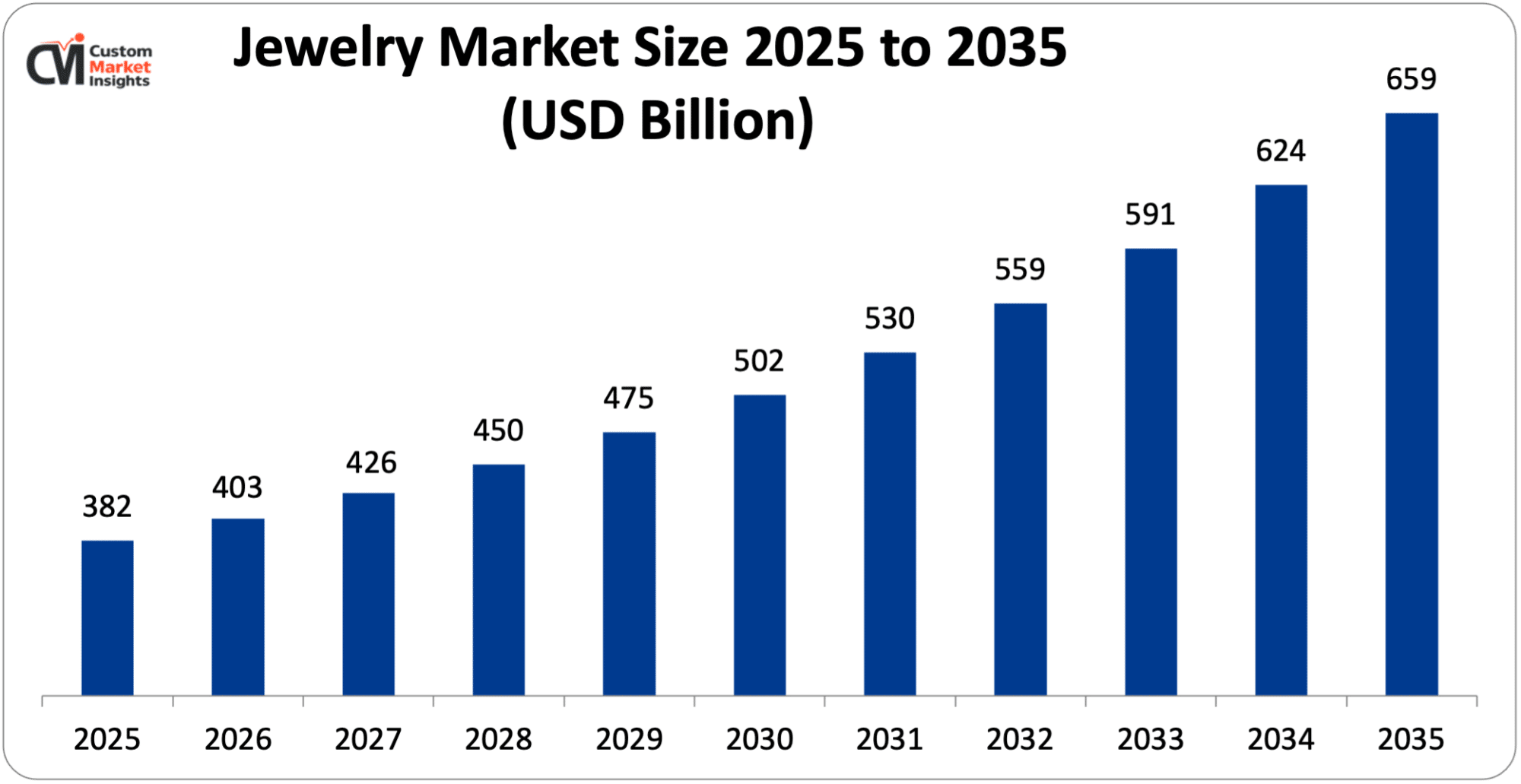
A new market research report from Custom Market Insights projects the global jewelry market will grow from USD 382 billion in 2025 to USD 659 billion by 2035, at a compound annual growth rate (CAGR) of 5.6%. For overseas jewelry buyers, this signals sustained demand across product categories and materials, with opportunities in both fine and fashion segments.
Market size and growth trajectory
The global jewelry market was valued at approximately USD 382 billion in 2025 and is expected to reach USD 403 billion in 2026, according to the report. By 2035, the market is projected to hit USD 659 billion, reflecting a CAGR of 5.6% from 2026 to 2035. The study covers products including necklaces, rings, earrings, bracelets, and others, as well as materials such as platinum, gold, diamond, and other precious and semi-precious materials.
Key market players and competitive landscape
Major companies listed in the report include Harry Winston, Pandora, Louis Vuitton SE, Chow Tai Fook, Richemont, Signet Jewelers Ltd., Swarovski AG, Tiffany & Co., De Beers, and Malabar Gold & Diamonds, among others. These players are adopting digital marketing strategies and acquiring local brands to expand their customer base and market share, indicating a consolidating competitive environment that sourcing partners should monitor.

Growth drivers: sustainability, minimalism, and investment demand
The report identifies three key growth factors. First, shifting consumer preference from minimalist designs to sustainable materials creates business opportunities. Second, growing awareness of environmental and social issues is driving demand for recycled and upcycled jewelry, conflict-free diamonds, and fair-trade gold. Third, jewelry is increasingly viewed as an investment asset, particularly in regions where gold serves as a stable store of value, such as India, where gold jewelry purchases serve cultural and wealth-preservation purposes.
What buyers should watch
Overseas buyers should note the rising importance of sustainable and ethically sourced materials, as consumer demand for transparency in supply chains grows. The report also highlights the expansion of online retail channels and digital marketing by major brands, which may shift distribution dynamics. Additionally, the dual role of jewelry as both adornment and investment, especially in gold, suggests stable demand in key markets like India and China, supporting long-term sourcing strategies.
Source: Read the original report | Published: June 10, 2026