Editor’s Note
This article offers an inside look at the Gemological Institute of America’s global operations from its Carlsbad headquarters, where millions of gemstones are analyzed each year.
The massive campus on Armada Drive is the nerve center of an operation that stretches from Carlsbad to gem and jewelry centers across the globe. It’s just another day at the Gemological Institute of America (GIA) in Carlsbad, the worldwide headquarters of one of the leading authorities — make that the leading authority — on diamonds, colored stones and pearls. GIA oversees a vast network of laboratories, campuses and research centers all over the world. The massive campus on Armada Drive — an unassuming building off Interstate 5 — is the nerve center of an operation that stretches from Carlsbad to gem and jewelry centers across the globe, from New York to London, Mumbai to Bangkok, Johannesburg to Tokyo, analyzing 4 million gemstones every year.
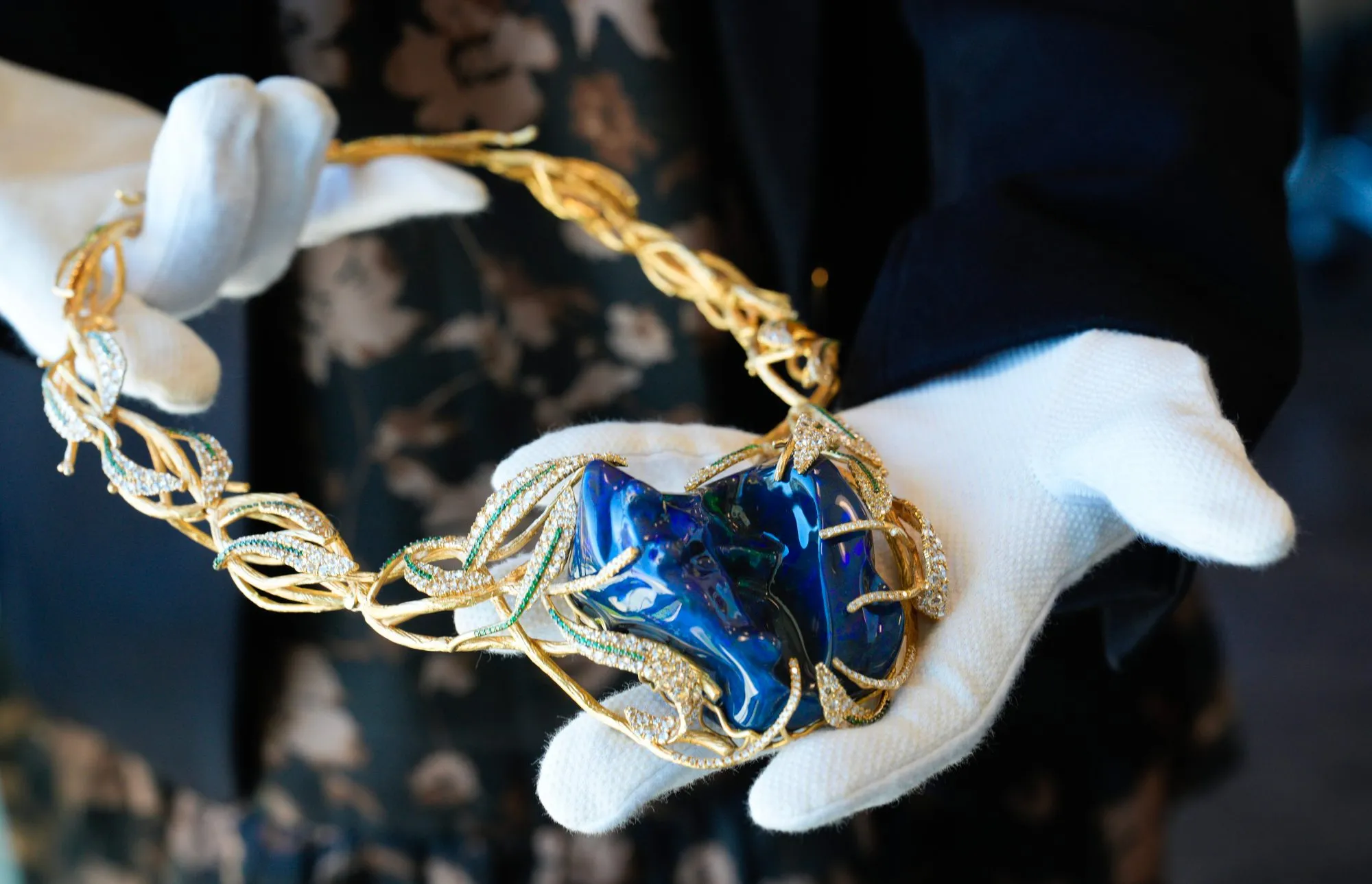
Unlike many specialized labs, GIA’s strength lies in its strong grasp of the world of gemstones — from field research to education to laboratory analysis. Besides being a research center and a school, GIA is also “a living museum, and we have over 100 exhibits spread throughout the campus,” says Rachelle Turnier, GIA’s manager of museum and in-kind gifts. The exhibits — free and open to the public but only by appointment — are spread out across the Carlsbad campus and feature thousands of artifacts and jewelry pieces. Most of the items on display are from GIA’s own collection, while some are on loan from other institutions or collectors.

At other institutions, gems and jewels often remain locked in safes and vaults. At GIA, the exact opposite happens. Because it’s an active learning institution, Turnier says,
Outside GIA’s main building is a statue of Richard T. Liddicoat, Jr., known as the “father of modern gemology.” After holding various positions at GIA, Liddicoat was named its president in 1952, a position he held until 1983, when he became chairman of the institute’s board of directors. Liddicoat created the modern grading standards for diamonds and was instrumental in expanding GIA’s reach across the globe.
Throughout the campus, display after display showcases GIA’s vast collection of gems and, perhaps more importantly, its deep well of information, from how stones are mined to a specific jewelry’s place in history. On the walls, there are timelines and charts, all designed to educate students and the public about gemology.

It’s a sunny Thursday morning in Carlsbad and the lobby of the Gemological Institute of America is hopping with activity. Up and down the stairs and in hallways, students in its highly coveted gemology graduate programs walk to and from one classroom to another. Down one hall from the lobby, peek through a small glass window, and you can see children from area schools looking into microscopes to examine gems.
Drive past the GIA campus, and it’s not immediately evident that the buildings contain some of the world’s most valuable gemstones and that the institute has been behind the identification or appraisal of some of the planet’s most famous gems, including the Hope Diamond, a 45.52-carat grayish-blue diamond first mined in India and passed through French royalty and English collectors before landing in American hands in 1949. Jeweler Harry Winston donated it to the Smithsonian Institution in Washington, D.C., where it’s now on display.
Queen of Passion, a ruby, diamond and platinum necklace with rubies from Myanmar, was on loan from a private collector to GIA and featured in its most recent exhibit, “Temples and Treasures of Southern Asia.” GIA’s curators are now working on the next exhibit, set to open in 2027. (Nelvin C. Cepeda The San Diego Union-Tribune)
