Editor’s Note
**Editor’s Note:** This report examines the paradox gripping China’s gold market in early 2026: while retail jewelry buyers are cutting back amid heavy price drops, gold sales persist, and the central bank continues to accumulate reserves. Investors who bought at the peak now face steep losses.
China’s gold market in the first half of 2026 was filled with contradictions and dramatic events.
He bought gold as an investment at the beginning of the year at a price of 1,200 RMB (about 4.6 million VND) per gram. He tried several times to recover his losses but couldn’t muster the courage to do so. By the end of June, the price per gram had fallen by more than 300 RMB (about 1.1 million VND).
At the start of 2026, gold prices rose from $4,318 to $5,598 per ounce, achieving 12 record highs. But after the peak, prices plummeted, wiping out all gains.
By late June and early July, gold prices had fallen to around $4,000 per ounce, a drop of nearly 30% from their peak. In June alone, prices fell 10.45%, the largest decline since the 2008 financial crisis.
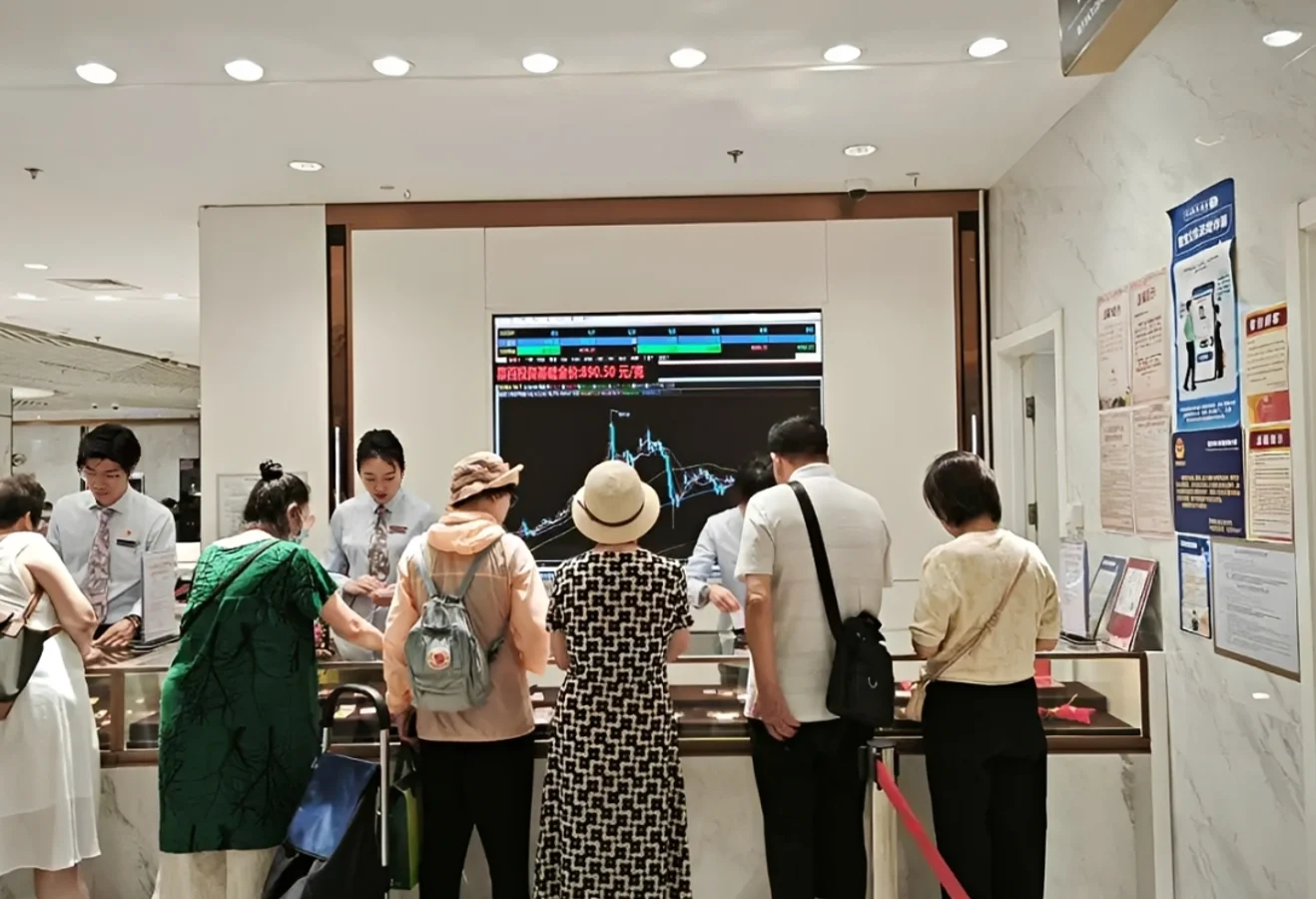
Despite the sharp drop in gold prices, demand for gold as an investment surged in China during the first half of 2026, with many Chinese consumers still flocking to stores to buy gold bars and coins. (Photo: Baidu)

The dramatic fluctuations in gold prices have profoundly reshaped the Chinese consumer market.
According to data released by the China Gold Association, gold consumption in China reached 303.29 tons in the first quarter of 2026, an increase of 4.41% compared to the same period last year.
While the total volume may appear “strong,” a structural analysis reveals that gold used for jewelry—the main consumer sector—reached only 84.62 tons in the first quarter, a sharp decline of 37.10% compared to the same period last year.
Meanwhile, consumption of gold biscuits and coins, considered investment symbols, reached 202.06 tons, a rapid increase of 46.40% compared to the same period last year. Consumption of gold biscuits and coins is now nearly 2.4 times that of gold jewelry.
According to several gold stores in Beijing, the current retail price of gold jewelry from various brands ranges from 1,230 to 1,250 yuan per gram, about 500 yuan per gram lower than the peak levels at the end of January, but still at a high level.

According to Huang Jiake, a precious metals analyst at Zhuochang Creative Consulting Co., Ltd., investment gold has lower processing and branding fees compared to gold jewelry. With gold prices continuously rising, buying gold jewelry for wear is no longer cost-effective.
As demand for risk aversion and value preservation increases, the public is turning to buying gold bars and coins for savings and appreciation.
Contrary to the panic among retail investors and the wait-and-see attitude of consumers, central banks have remained steadfast.
As gold prices crossed the $4,000 mark, the People’s Bank of China released data on July 7, showing that China’s gold reserves reached 75.44 million ounces by the end of June, an increase of 480,000 ounces from the previous month. This marks the 20th consecutive month that the People’s Bank of China has increased its gold purchases.
Globally, central banks are enthusiastic about buying gold. Wang Qing, chief macro analyst at Dongfang Chengda Finance Co., Ltd., believes that gold is a widely accepted medium of final payment globally. The increasing purchase of gold by central banks could enhance the credibility of sovereign currencies, thereby supporting the prudent internationalization of the renminbi.
![[चित्र] डोंग नाई में शहीद सैनिकों के अवशेषों की खोज के लिए खोज क्षेत्र का विस्तार किया जा रहा है](https://vphoto.vietnam.vn/thumb/1200x675/vietnam/resource/IMAGE/2026/07/19/1784447647838_ndo_br_z8058490536128-a72a40019fa5d61cc9c4e96e30149e71-8452-jpg.webp)
Forecasts from various organizations differ.