Editor’s Note
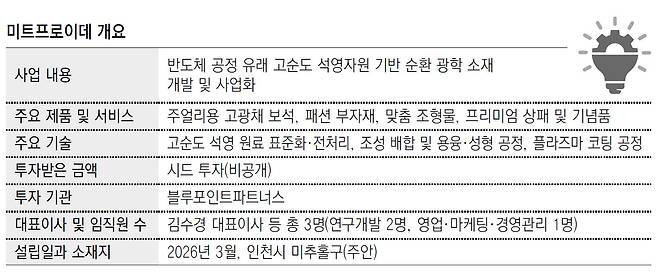
**Editor’s Note:** This article highlights Mitfreude Co., Ltd., an Incheon-based startup that repurposes high-purity quartz glass waste from semiconductor manufacturing into luxury items like jewelry and optical lenses. After two years of development, the company introduces ‘Gentium,’ a sustainable material turning industrial byproducts into high-end products.
Incheon = Reporter Heo Jin-seok
2026-07-11 01:44
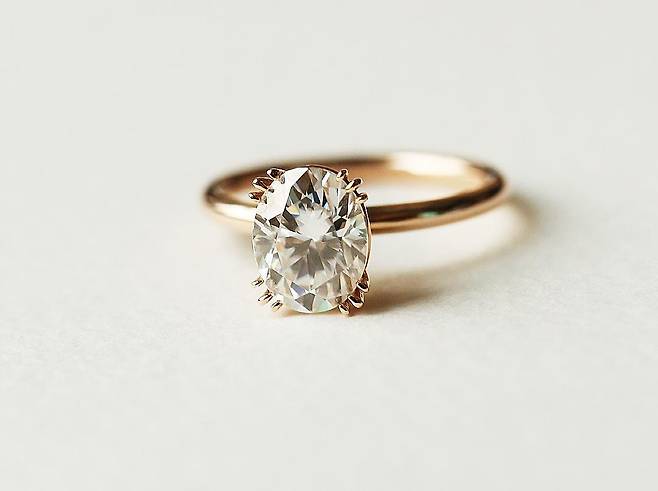
At a knowledge industry center in Juan-dong, Michuhol-gu, Incheon, a startup is transforming discarded high-purity (99.9999%) quartz glass from semiconductor processes into high-end optical materials such as fashion accessories, jewelry, and optical lenses. Mitfreude Co., Ltd. has developed a new material called ‘Gentium’ after two years of R&D.
Starting next year, the European Union will mandate Digital Product Passports (DPP) for fashion and jewelry, requiring QR codes to display origin, hazardous substance content (e.g., lead), carbon emissions, and recycled/recovered material content. This creates a significant challenge for traditional crystal products containing lead made from virgin resources. Mitfreude aims to replace this market with Gentium. The company also expects Gentium to serve as an alternative material in the lab-grown diamond market.
Swarovski, which dominated the crystal market, abruptly halted its annual 700 billion won B2B material supply two years ago as part of a brand maintenance strategy. Previously, it supplied crystals to about 5,000 fashion and jewelry companies including Prada, Armani, and Gucci.
Quartz glass is an indispensable consumable in semiconductor manufacturing, used in nearly all processes where wafers are exposed to high temperatures and corrosive gases. When micro-cracks or surface damage occur, it is discarded—mostly landfilled or incinerated. Some is recycled into sparkling additives for asphalt, but very little is returned to its original use.
Mitfreude’s technology consists of two main stages. The first is remelting and molding technology. Director Lim Young-seok (CTO) explained:
The company has eliminated hazardous heavy metals through its proprietary formulation. By adding trace elements, they suppress bubbles and cracking during melting, and precisely control temperature and viscosity to enhance process stability. The core technology lies in finding the optimal composition that balances strength and transparency.
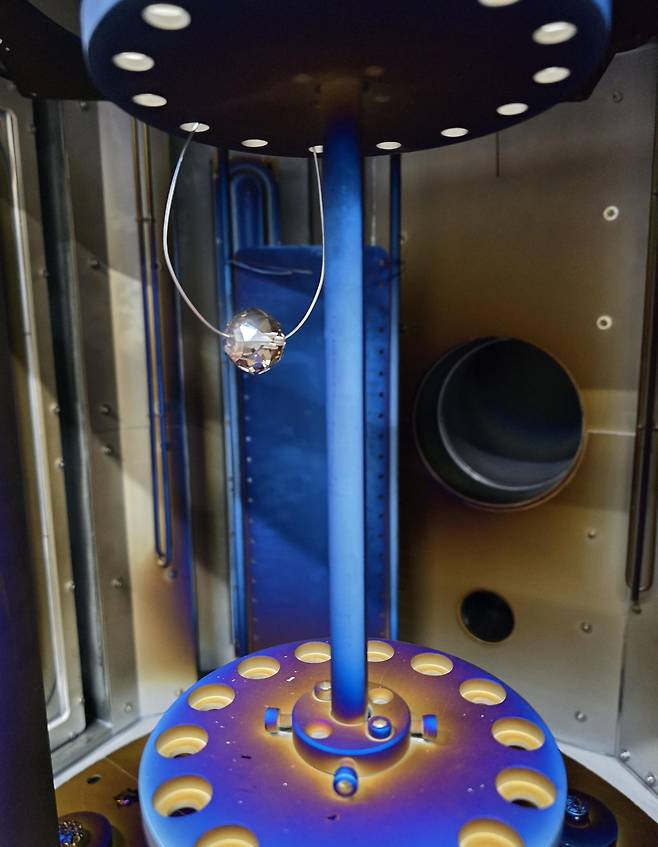
The second stage is plasma coating technology. After remelting and molding, the base material is similar to ordinary crystal, but adding ion-bonding plasma deposition and optical design changes surface properties. This enhances light reflection and extraction efficiency, producing stronger brilliance and sparkle than conventional crystal.
In Ray Tracing optical simulations, Gentium scored 94 points for Brilliance (brightness), 98 for Fire (light dispersion), and 97 for Sparkle (twinkle intensity).
Unlike many crystal manufacturers including Swarovski that add lead to increase refractive index, Gentium achieves this through lead-free composition design and remelting processes.
The company plans to advance process technology by dividing Gentium into two tracks: aesthetic-focused jewelry and fashion accessories/trophies.
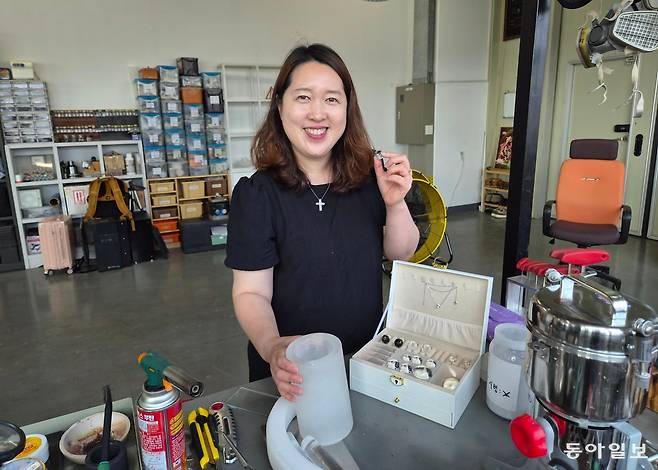
Mitfreude was co-founded by Kim Soo-kyung and Director Song Si-won (37), both with liberal arts backgrounds. Kim worked in NGO and startup support fields, while Song operated a jewelry brand for 15 years. They met at an entrepreneur meetup three years ago and decided to create jewelry from recycled resources. Unable to find a domestic company to melt quartz glass, Song emailed over 100 Chinese companies to secure a partner. Director Lim, with 14 years of experience at the Korea Institute of Industrial Technology and a National Skills Competition gold medal in casting, elevated process completion.
Notably, all technology development was funded personally by the two founders before incorporation.
Before incorporation, Mitfreude aggressively emailed European luxury brand headquarters. Early this year, a renowned European fashion house advocating ethical luxury responded about Gentium samples:
The company only incorporated after hearing that the fashion house’s design team plans to develop products using Gentium next year. Meetings with other global luxury houses are scheduled within the year.
Challenges remain. Discarded quartz glass is not yet recognized as a recycled resource, preventing bulk direct purchasing. The company has applied for a regulatory sandbox and aims to gain official recognition as soon as possible. The conservative jewelry market may also take time to accept Gentium as a new material.
Despite these hurdles, Mitfreude aims to enter the global market with fashion accessories this year and next, and advance technology to enter the jewelry market by 2028, establishing a new crystal market using recycled resources.
Incheon = Reporter Heo Jin-seok [email protected]