Editor’s Note
**Editor’s Note:** This article explores how ADAM ET ROPÉ’s strategic rebranding in 2021 reinforced its commitment to sustainability while broadening its appeal. By evolving from a fashion-focused select shop into a holistic lifestyle brand, the company demonstrates how thoughtful brand transformation can drive both commercial growth and environmental responsibility.
Launched in 1990, ADAM ET ROPÉ is a select shop known for its minimalist, clean aesthetic in both original and imported fashion items. In 2013, its new format, SALON adam et ropé, was born as a lifestyle brand encompassing clothing, food, and shelter. Following a rebranding five years ago, it now operates as a select shop centered on fashion while also offering lifestyle goods, gaining support from a wide demographic.
During the 2021 rebranding, the brand’s core mission became “proposing a sustainable lifestyle.” This coincided with the Jun Group, which operates SALON adam et ropé, launching its SDGs promotion statement, “GO CLEAN GO FUTURE.” Kohei Yamamoto, now General Manager of the Ropé & SALON adam et ropé Division at Jun Co., Ltd., joined the company at that time and has been a key driver of SALON adam et ropé’s sustainability initiatives.
In terms of environmental consideration, the brand actively uses sustainable materials. This year, it aims to switch 65% of all products to items made with sustainable materials. Furthermore, by no later than 2030, the goal is to achieve fully traceable, sustainable materials and manufacturing methods for all products. Specific examples include organic cotton grown under sustainable farming and fair labor conditions with international certification, TENCEL™ Lyocell fibers made from wood pulp, and recycled fibers like ECO-PET® made from used PET bottles, clothing, and textile waste. Product hangtags feature marks like “ORGANIC” or “SAVE FOREST,” allowing consumers to instantly identify environmentally and socially conscious items.
From the perspective of preserving Japanese production regions, the commitment to Made in Japan as much as possible is another action linked to sustainability. The brand utilizes Japan’s high-level technology and rare looms, incorporating materials and items carefully crafted in domestic factories.
While there’s an image of aging in local manufacturing sites, visiting factories often reveals many young local people working hard.
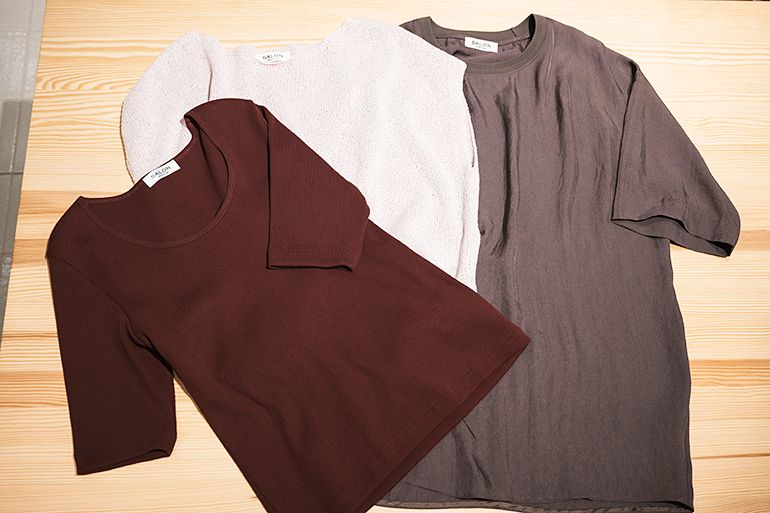
The two items on the left are from the popular “Primavere” series using high-performance organic cotton. The right is a blouse made of acetate material from wood pulp and plastic waste. All fabrics are woven in domestic factories.
Since the rebranding five years ago, the brand has also adopted sustainable materials in store design. For example, straw, a byproduct of harvesting grains like rice, is used for decoration and mixed with soil for wall material. Recycled tiles and thinned wood are also incorporated. These organic materials are balanced with inorganic-textured interiors to create a refined, sophisticated atmosphere.
The word “Salon” in the brand name embodies the hope that it becomes a place where people who resonate with the brand’s stance can gather and communication spreads.
The SALON adam et ropé store on the 4th floor of NEWoMan Takanawa South uses natural materials like soil and straw for interiors, allowing customers to enjoy shopping in a calm atmosphere.
Yamamoto, who has driven SALON adam et ropé’s sustainability efforts since joining, first became interested in sustainability during his previous job. While handling apparel at a major manufacturer, he was shocked to witness the challenges faced by cotton farmers in India.
With high costs for pesticides, seeds, and fertilizers, farmers fall into debt. However, cotton cultivation doesn’t generate enough income to repay loans, leading to increasing poverty. Children can’t attend school, leading to child labor issues, and some desperate producers even take their own lives. Following this, Yamamoto spent about two years working with a foundation supporting organic cotton farmers in India.
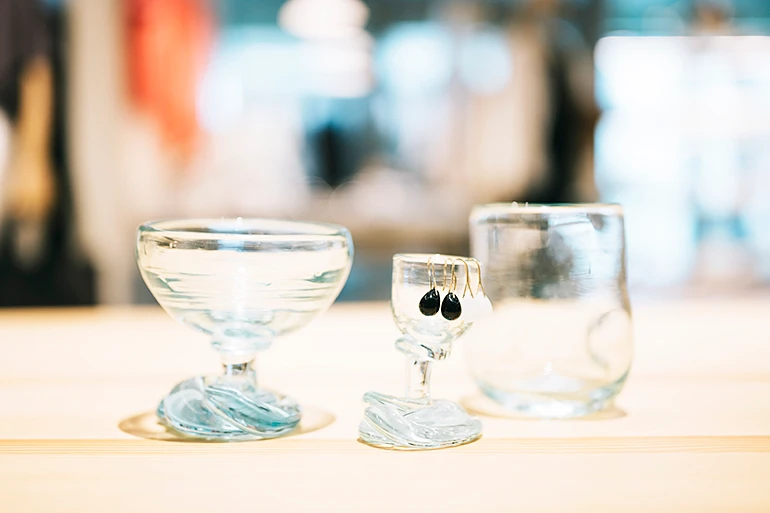
Completedworks, a London-based brand known for jewelry primarily made from recycled materials. At SALON adam et ropé, in addition to jewelry, lifestyle goods made from recycled glass are also available.
Through his personal experiences, Yamamoto has deepened his interest and knowledge in sustainability. He is now considering collaborating with that foundation to introduce a program where purchasing SALON adam et ropé’s organic cotton items directly supports organic cotton farmers.
SALON adam et ropé
https://salon.adametrope.com/