Editor’s Note
**Editor’s Note:**
Jade, once considered a gem for older generations, is making an unexpected comeback among Gen Z in Seoul. As summer approaches, young shoppers flock to Jongno’s jewellery district, drawn by affordable, unique rings and the tactile joy of selecting natural stones. The trend highlights a shift toward vintage nostalgia and in-person browsing over online convenience.
Jade, long seen as a gemstone for older generations, is enjoying an unlikely revival among Gen Z. – Photo: The Korea Herald/ANN
SEOUL: The ring is always greener on someone else’s finger.
As summer arrives and sleeves grow shorter, young shoppers are making their way to Seoul’s Jongno jewellery district to find the perfect jade ring.
Jade, or “ok”, long seen as a gemstone for older generations, is enjoying an unlikely revival among Gen Z. Affordable, unique and tinged with vintage nostalgia, the rings have become a sought-after accessory.
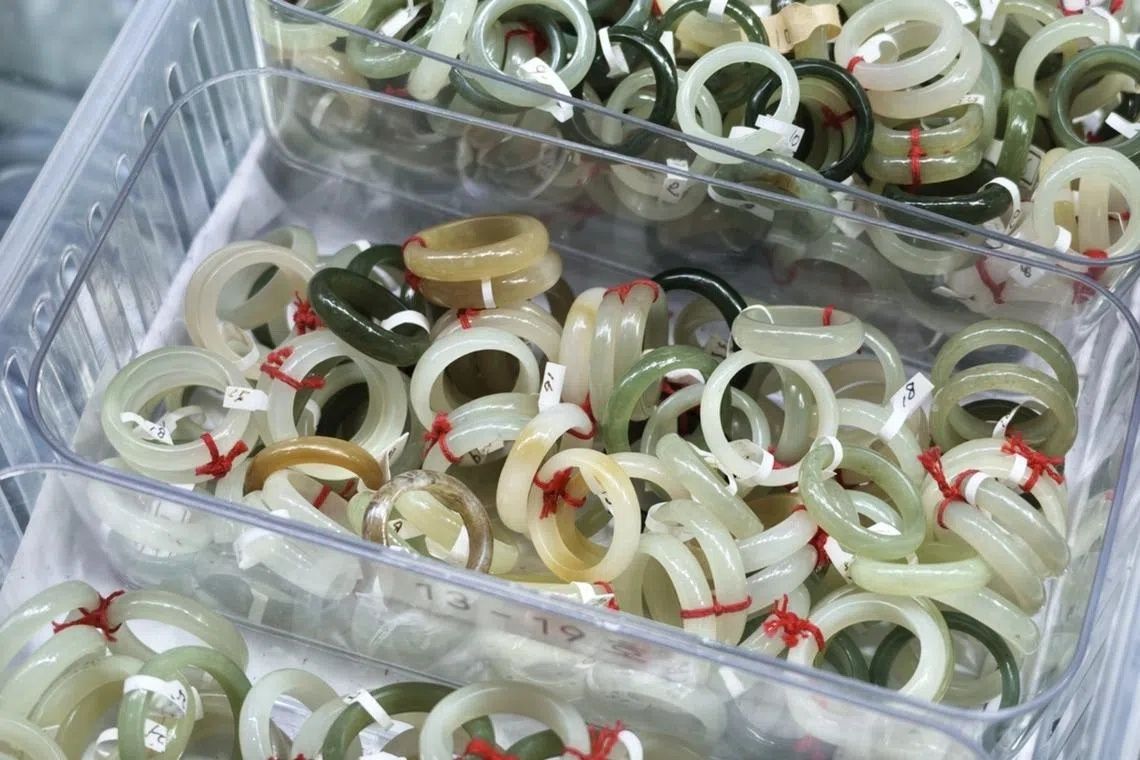
Although online retailers promise fast delivery, many prefer to browse in person. Because every natural jade stone is different, they say, the search itself is part of the experience.
This hasn’t always been a common sight in this area of Jongno-gu, Seoul’s jewellery commercial hub since the 1930s, as most stores used to be only wholesale.
As demand for jade faded over the years, wholesalers increasingly turned to retail customers. Now, with jade becoming a fashion trend, Oksibang and Yeijak Jewelry are among the popular shops specialising in jade that welcome walk-ins.
Now, jade is changing with the younger market.
The ring designs are simpler, thinner and light-coloured. And slimmer rings mean affordable prices, starting from 35,000 won (S$30). Lighter colours match well with everyday outfits: fresh green for summer vibes, to yellow, lavender, brown, white and black.
Beyond rings, pendants are shaped like puppies, bears, and baby dragons, and bracelets are Cuban-chained, designed to appeal to younger shoppers.
Every natural jade stone is different and the search itself is part of the experience. – Photo: The Korea Herald/ANN
For these generational stores, opening online stores and marketing on social media made it easier for younger customers to find affordable jade rings.
Historically, Korean royalty wore jade as a symbol of protection, good fortune and royal authority. Jade jewellery was worn to ward off evil and bring health, happiness, long life and prosperity.
The belief persists today. A jade ring is believed to protect the wearer and bring good luck. Yeijak Jewelry designed a “silver lining jade ring” to capture such meaning in modern design.
Jade rings have long been wedding presents for mothers of the bride and groom, or “yedan” as Koreans say, representing respect and love for the elders and eternal love between the newlyweds.
During The Korea Herald’s visit to Oksibang, three couples visited to buy matching rings.
Korean jade, or Chuncheon jade, is a native nephrite stone found in Chuncheon, Gangwon Province. Like other varieties of jade, it comes in a range of colours, but its signature hues are soft ivory and warm brown.
Unlike jadeite, which is found almost exclusively in Myanmar and Guatemala, nephrite is mined in many parts of the world. Its quality tends to be more consistent, with a relatively uniform range of clarity and luster, keeping prices comparatively stable.
That makes nephrite jade – including Korean jade – an accessible choice for consumers in their 20s and 30s while retaining the stone’s traditional appeal.
Alejandra Magana, a 26-year-old student from Mexico, visited Oksibang to buy jade rings for herself and her mother. For her first purchase, she picked slim teal-coloured ones.
The trend has also been fuelled by celebrities. BTS’ V wore a set of jade rings during the group’s Arirang comeback concert at Gwanghwamun Square on March 21.
Since then, Lee said overseas orders have risen, and more international tourists have been visiting the store to purchase jade rings. – The Korea Herald/ANN