Editor’s Note
**Editor’s Note:** This article highlights a critical gap in the diamond and gemstone industry: the lack of standardized oversight for appraisal organizations. As consumer trust is placed in certificates and brand names, recent legal actions against a major diamond company serve as a stark reminder that certification alone is not a guarantee of authenticity.
Currently, there is no consensus on the operation or licensing of diamond and gemstone appraisal organizations. Consumers primarily rely on certificates such as appraisal reports and trust in the companies that operate these appraisal organizations.
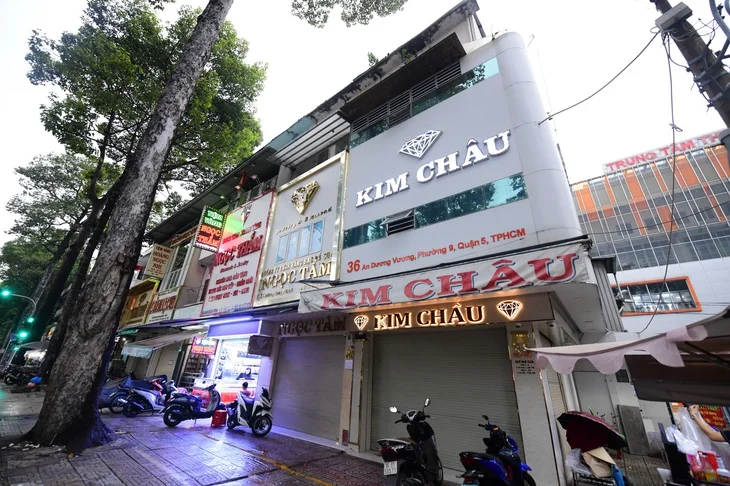
Many people have long believed that purchasing diamonds with certificates from major brands is safe. However, this notion has been questioned following the recent prosecution of executives from a famous diamond company on smuggling charges.
In an interview with Tuoi Tre newspaper, Associate Professor Nguyen Ngoc Khoi (DGemG, Senior Lecturer, Head of Technical Committee TC174: Jewelry under the Standards, Metrology and Quality Committee of the Ministry of Science and Technology) stated, “This incident is not just a problem for a few companies, but an issue for the entire Vietnamese gemstone market.”
One of the institutional shortcomings is the inadequate mechanism for protecting consumer rights. The majority of Vietnamese consumers lack the basic knowledge to distinguish natural diamonds and gemstones from treated ones, as well as the criteria to assess their value.
Meanwhile, state authorities have largely neglected the oversight of diamond and gemstone appraisal organizations. Unlike gold, there is currently no unified state agency responsible for licensing or managing the activities of diamond and gemstone appraisal organizations.
According to Khoi, accreditation bodies in this field are either certified by the Ministry of Science and Technology (or provincial Departments of Science and Technology) or licensed by the Ministry of Industry and Trade (or provincial Departments of Industry and Trade). In some cases, they may not require specific conditions regarding facilities, personnel, or equipment.
In practice, there are too many diamond and gemstone appraisal organizations. For example, there are 13 laboratories in Hanoi, 11 in Ho Chi Minh City, 3 in Yen Bai, 2 in Da Nang, and 1 in Can Tho.

This incident shows that issuing bodies have been issuing certificates that do not meet the required standards in terms of both expertise and professional competence.
Nguyen Thi Thu Huong, a financial advisor at FIDT, also pointed out a major drawback: Vietnam still lacks mandatory requirements for the independence of appraisal organizations.
Therefore, many countries consider the independence of accreditation bodies as a core element, similar to the requirement for independent audits in the financial sector.
According to Tuoi Tre’s investigation, many people still confuse appraisal certificates with certificates of origin. An appraisal certificate verifies characteristics such as a diamond’s weight, color, and clarity, but does not prove that the stone was legally imported or its origin.
Meanwhile, current law does not require companies to provide customers with this certificate of origin at the point of retail sale.
Discussing this issue, Khoi proposed that the state should establish an agency to license and manage the activities of organizations that inspect diamonds and gemstones.

First, all currently operating inspection organizations should be scrutinized, checking their personnel, equipment, facilities, inspection procedures, and scope of responsibility in accordance with the general requirements of state management agencies.
According to experienced experts, to ensure transparent trading of diamonds and gemstones, Vietnam urgently needs to establish diamond and gemstone exchanges similar to those in some countries around the world, such as Belgium, India, Israel, and Singapore.
While waiting for the establishment of an exchange, Khoi advocated for an independent monitoring and verification mechanism. Specifically, he proposed establishing an internationally accredited appraisal laboratory in Hanoi and a similar one in Ho Chi Minh City.
These institutions could be established by the state, like the Gem and Jewelry Institute of Thailand (GIT), or within the framework of the Vietnam Gemstone Association or the Vietnam Jewelry and Craft Association.
These inspection bodies would be responsible for conducting independent inspections that meet international standards and also for monitoring the activities of other inspection bodies.
Huong expressed her view, emphasizing that the key is not to increase the number of management items, but to manage with appropriate focus. She stated that the ultimate goal is not to add more procedures for businesses, but to restore consumer confidence through transparency and independence in inspections.
Without mechanisms for cross-checking and independent monitoring, similar incidents could easily recur at other companies because the problem lies not just with specific companies, but with the system structure itself.